01PRP hair restoration 101
What is PRP for hair loss, and who is it for?
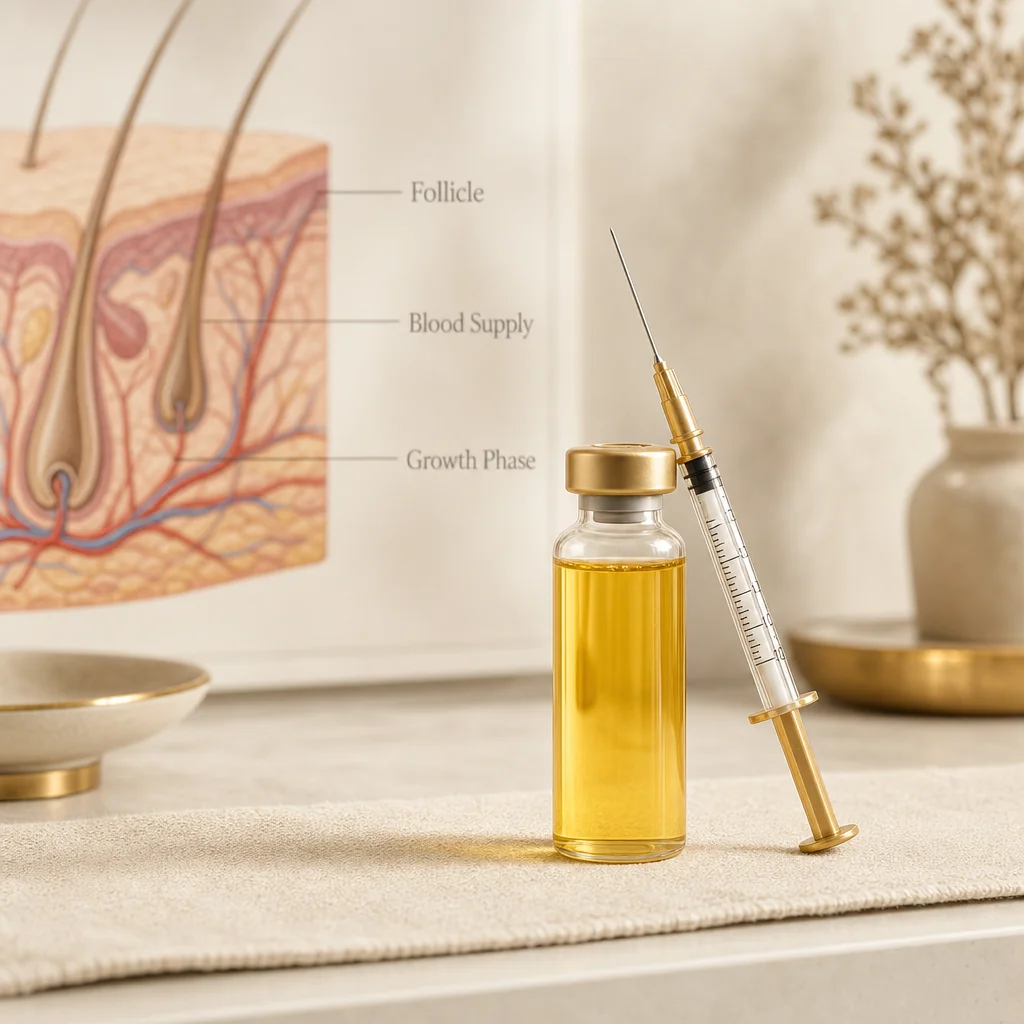
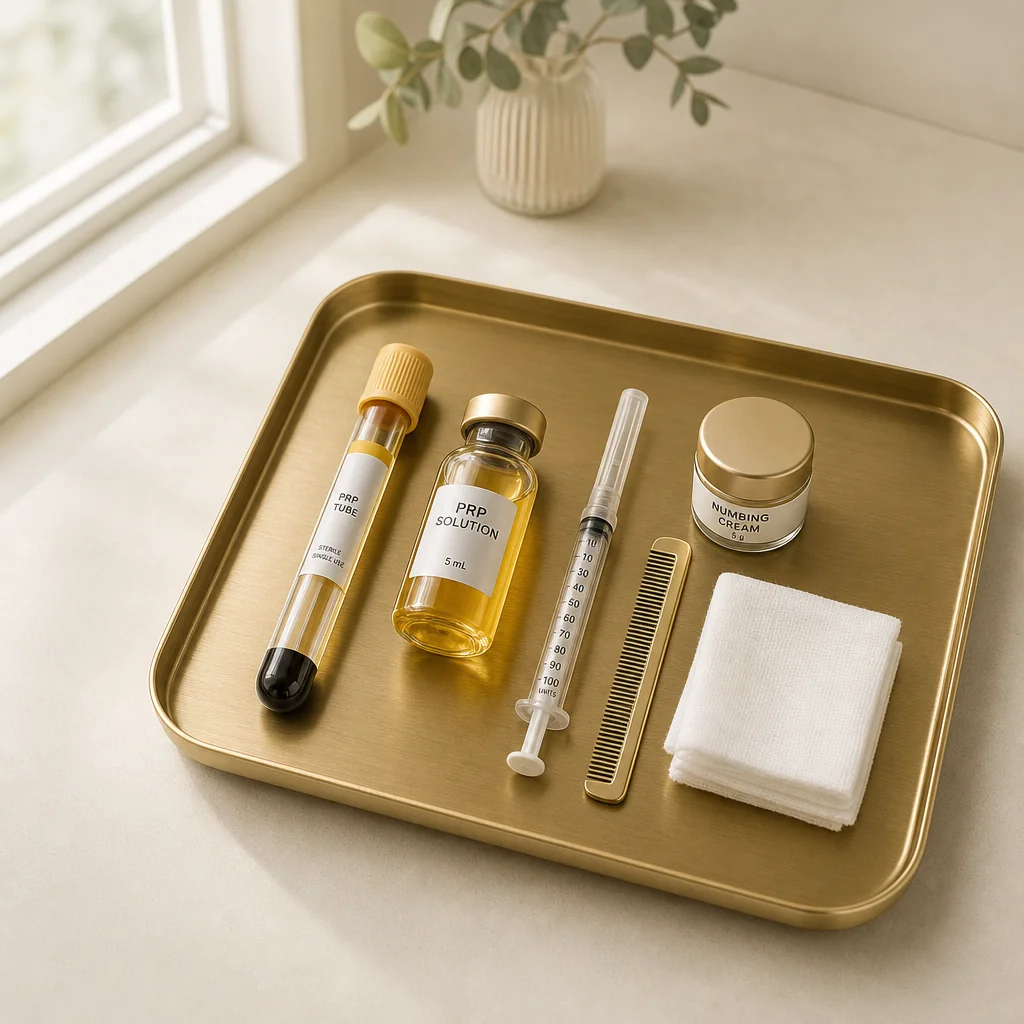
A little of your blood is drawn and spun in a machine to separate the platelet-rich plasma. That plasma is injected into the scalp where the hair is thinning.
- What it is offered for
- Pattern hair loss, the gradual thinning that runs in families, in men and in women. Results differ from person to person. Dr. Rockhead talks you through what to expect for you before anything is booked.
- PRP or a hair transplant?
- They are different things. A transplant is surgery that moves hair you already have, and the moved hairs are mostly permanent. PRP moves nothing: it is injected where the hair is thinning, and sessions are repeated over time. A hair transplant is not among the treatments Oshun lists.
Before you decide
What to know first.
Dr. Rockhead goes through your health, and the cause of your hair loss, at your consultation, before anything is booked.
Upkeep sessions are repeated every three to six months for as long as you want the result. There are also scalp treatments and tablets for hair loss. Ask where PRP sits among them for you.
02Medical Leadership
Who do you meet first?
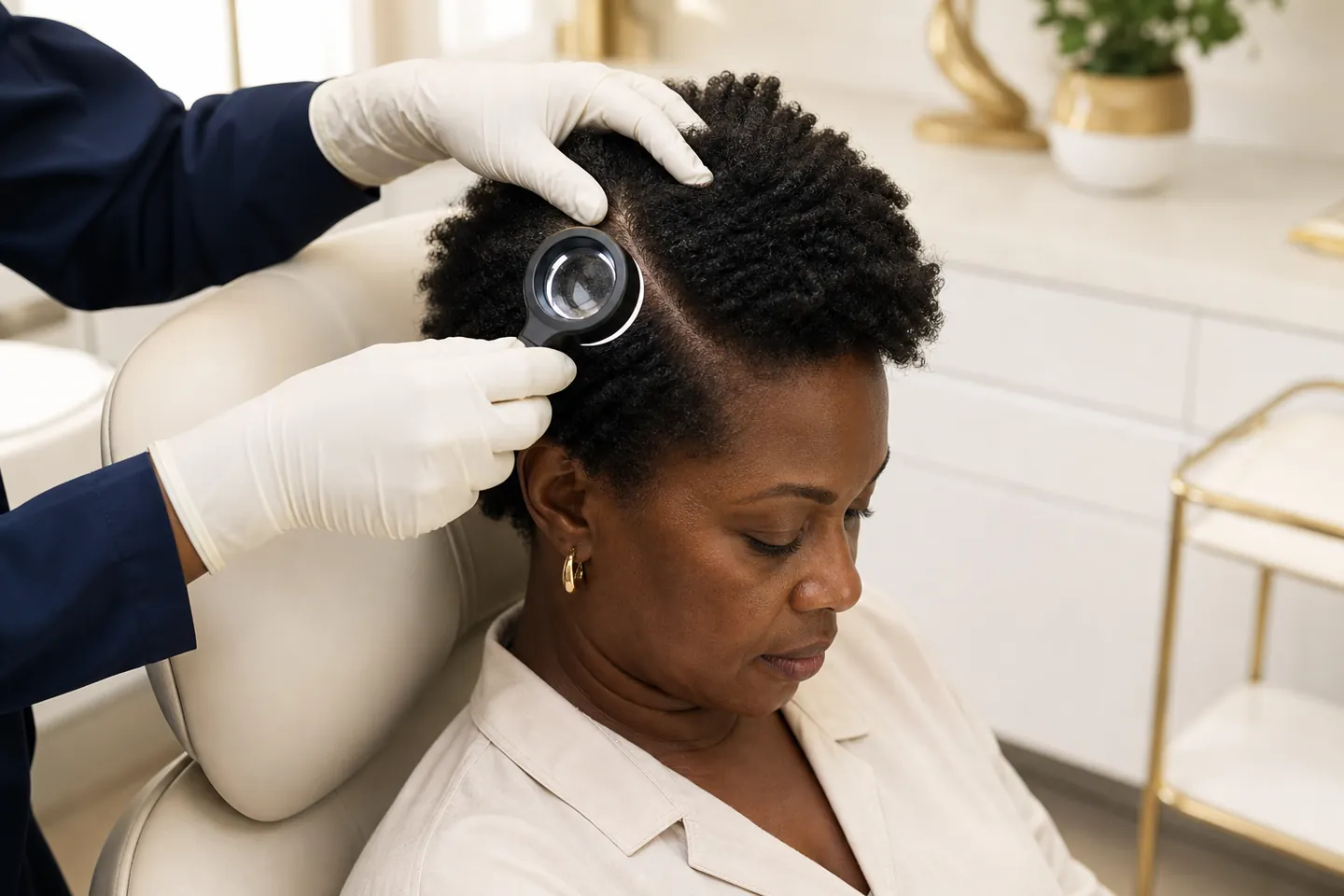
Dr. Charles Rockhead, in person, at 9 Devon Road in Kingston. He goes through your health and your medicines before anything is planned. Ask him what is causing your hair loss, and how the plasma is prepared. He gives the injections himself.

Dr. Charles Rockhead, Medical Director — Oshun Cosmetic Services, Kingston.
Dr. Charles Rockhead
Medical Director · Board-Certified OB/GYN · 30+ years of practice
Dr. Charles Rockhead is a board-certified Obstetrician and Gynaecologist with more than thirty years of practice in Kingston. He is the Medical Director of Oshun Cosmetic Services and the founding physician of Amadeo Medical Group, the parent clinical practice.
Read the clinic story · View Dr. Rockhead's LinkedIn
03A PRP session
What happens at a PRP session?
i.
Getting ready
Arrive with a clean scalp and no products in your hair. We ask you to avoid aspirin, ibuprofen and similar painkillers for a week before and two weeks after each session. If a doctor told you to take one, check with that doctor first.
ii.
The blood draw
Blood is taken from your arm, as for a blood test, and spun to separate the plasma.
iii.
The injections
The plasma is injected shallowly into the skin of the scalp across the thinning area, with numbing where it is needed. It is somewhat painful, and the injections take about ten minutes.
iv.
Afterwards
Most people can drive home and return to work the same day. You may wash your hair gently from the next morning, and leave hard exercise for several days.
04Results & aftercare
How many PRP sessions will you need, and when do you see a change?
- How many sessions
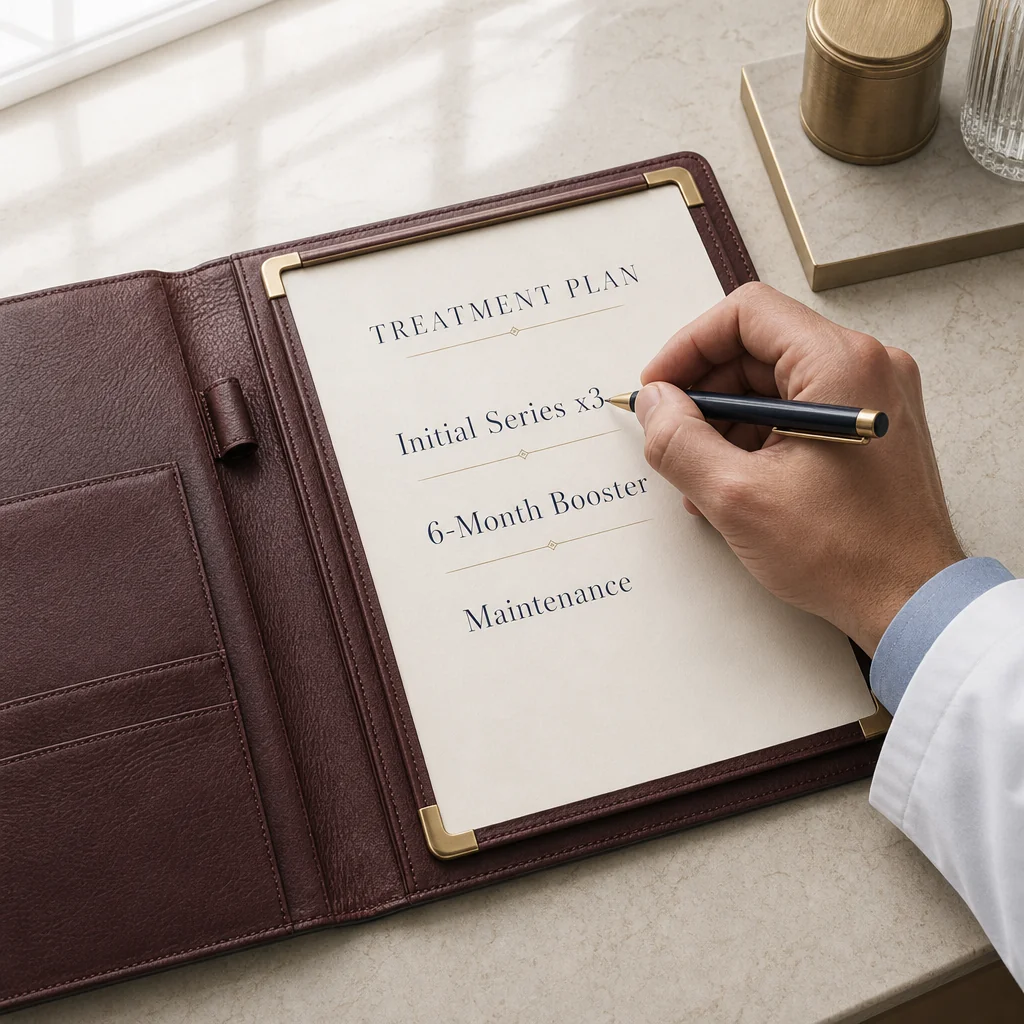
- The usual plan is one a month for three months, then one every three to six months. There is no single standard.
- When you would see a change
- Any change takes a few months to show, and it can take as long as six. Results differ from person to person.
- Side effects
- Expect some pain, bruising and swelling in the scalp. They tend to go away within a few days.
- When to call us
- Call (876) 676-6297 if pain or swelling is getting worse after a few days, or if you have a fever, or pus or spreading redness on the scalp. If we're closed or you can't reach us, see a doctor.
05Is PRP right for you
Who is PRP for, and who should see a dermatologist first?
- Who it may suit
- Adults with pattern hair loss whose hair is thinning, not gone, and more so when the loss is recent.
- When to see a dermatologist first
- See one now if your hair is thinning or breaking at the crown, if your scalp burns, stings, itches or is sore, red or scaly, if the loss is sudden or in patches, or if your hairline is going where a style pulls. Scarring hair loss at the crown is more common in Black women, and hair does not grow back where the scalp has scarred. Hair lost to tight styles can regrow if the pulling stops early. For either, get the diagnosis from a dermatologist first and bring it to your consultation.
- Who should not have it
- We don't give PRP during pregnancy or breastfeeding, with an active infection, with a bleeding or platelet disorder, on a blood thinner, with any blood cancer or other active cancer, or with skin cancer or pre-cancer in the area. The American Academy of Dermatology also advises against it with hepatitis C or HIV.
- The risks
- The biggest risks come from how the blood is handled. It must be kept sterile, or you could get an infection, and it must be your own, or you could become very sick. Yours is drawn and used in the same visit.
06Cost & booking
How much does PRP hair restoration cost in Jamaica?
- What it costs
- PRP hair restoration is on Oshun's price list at J$120,000. Your written quote says what that covers and how many sessions are planned, before any blood is drawn.
- The whole cost
- PRP is repeated, so ask for the cost of the first three sessions and of the upkeep, not only the first visit.
- Paying
- Cash, debit card, credit card or approved financing.
If this sounds right
The next step is a conversation, not a commitment.
Start with the cause. If PRP is not the right treatment for your hair loss, the consultation is where you find that out.
No obligation · Every consultation is in-person with Dr. Rockhead.