01The basics
What is metabolic testing, and do you need it?
It is a name for three different kinds of test: blood tests, a breathing test, and a body-fat estimate. A formula can estimate the resting rate with no machine. An X-ray body scan is a different test, named under who should not have it. We may not offer all three. Before you book, ask us which of them your visit would include, how each one is done, and how long it takes.
- Blood tests
- The Cleveland Clinic says the common checks of metabolism are blood tests called metabolic panels, usually recommended at least yearly for adults. A blood test might confirm a thyroid problem.
- A breathing test
- It measures the calories you burn at rest. How it is done is part of the question above.
- A body-fat estimate
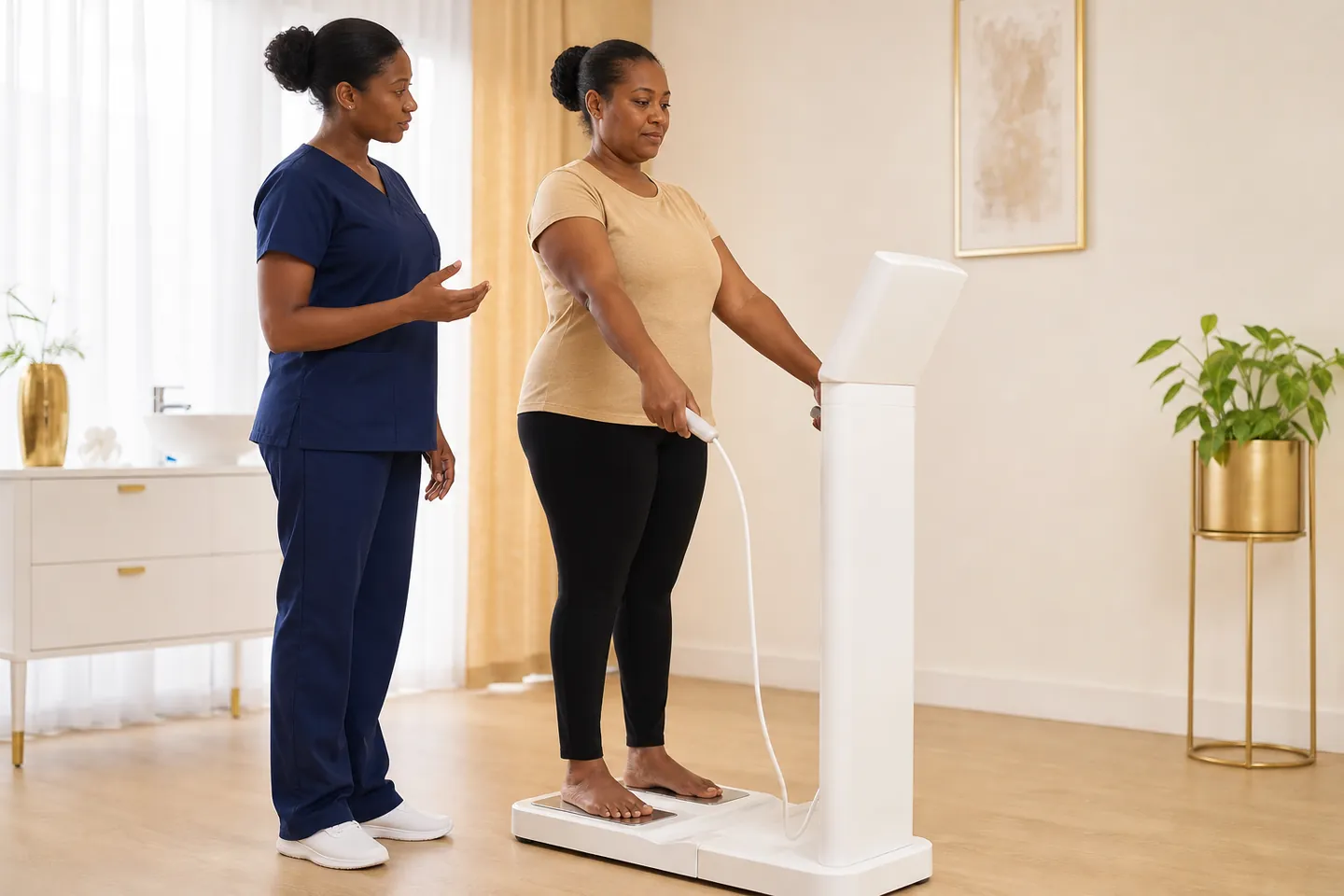
- An impedance device passes a small current between electrodes on the skin and estimates fat and lean tissue.
- An estimate by formula
- A dietitian can work out your resting rate from your weight, height, age and sex. For overweight or obese adults, the Academy of Nutrition and Dietetics recommends that formula when a measured rate is not available.
Before you decide
What to know first.
Dr. Rockhead goes through your health first, and explains which tests, if any, would help you.
For overweight or obese adults, the Academy of Nutrition and Dietetics recommends a measured rate for accuracy.
02Medical Leadership
Who do you meet, and what is checked first?
You meet Dr. Charles Rockhead, a gynaecologist, in person, at 9 Devon Road in Kingston. Tiredness, weight gain, feeling cold when other people are not, joint and muscle pain, dry skin or dry, thinning hair, heavy or irregular periods or fertility problems, a slowed heart rate or depression can be signs of an underactive thyroid. The US National Institutes of Health says many of them are common and do not necessarily mean a thyroid problem. He explains which tests, if any, would help.
- Tell him about these
- Every medicine and supplement you take, a pacemaker or any other implant, a joint, pin, plate or a stent in the heart, pregnancy or breastfeeding, a recent illness, and an eating disorder now or in the past.

Dr. Charles Rockhead, Medical Director — Oshun Cosmetic Services, Kingston.
Dr. Charles Rockhead
Medical Director · Board-Certified OB/GYN · 30+ years of practice
Dr. Charles Rockhead is a board-certified Obstetrician and Gynaecologist with more than thirty years of practice in Kingston. He is the Medical Director of Oshun Cosmetic Services and the founding physician of Amadeo Medical Group, the parent clinical practice.
Read the clinic story · View Dr. Rockhead's LinkedIn
03The tests
What happens at a test?
i.
Before
How to prepare is set when you book, because it differs by test. The Cleveland Clinic says caffeine and nicotine can raise your basal rate. Its strict laboratory measurement of that rate follows a 12 to 14 hour fast, and that strict test is not a breathing test in a clinic. The maker of the impedance device used in one US health survey recommends a six-hour fast.
ii.
Blood tests
Whether a sample is taken here is settled before you book. A blood test might confirm a thyroid problem.
iii.
A breathing test
The picture on this page shows a breathing machine. Whether your visit includes one is part of the question in the first chapter.
iv.
A body-fat estimate
A small current passes between electrodes on the skin, and the device works out an estimate.
- How long it takes
- Plan for 30 to 60 minutes, and confirm the length when you book.
04Your results
Your results, and when to be checked.
- When to be checked
- The signs are in the chapter above. The US National Institutes of Health says a thyroid problem cannot be diagnosed from symptoms alone. Weight changes or tiredness you cannot explain are a reason to be checked, and that check starts at your consultation with Dr. Charles Rockhead.
- What a number means
- The Cleveland Clinic gives the average basal rate as around 1,410 calories a day for women and around 1,696 for men, and says there is no normal. It says these averages leave out activity and the energy used to digest food, and that they may differ by race or ethnicity. They are not eating targets.
- What changes it
- It falls with age, mainly through loss of muscle, usually with the menopause, with eating too few calories, and with low thyroid hormone. Illness, pregnancy and breastfeeding raise it.
- What you can do with it
- The Cleveland Clinic names building muscle as one healthy way to raise your rate.
- Testing again
- The Academy of Nutrition and Dietetics says a review may follow 15 to 20 pounds lost or a change in activity. Re-measuring is one option.
05Risks
The risks, and who should not have which test.
- The risks
- The Academy of Nutrition and Dietetics lists no risk or harm from measuring your resting rate. A body-fat figure from an impedance device is an estimate. No number here is a diagnosis.
- Who should not have it
- No impedance device in pregnancy, or with a pacemaker or another implanted electronic device. The same US survey also left out people with a joint, pin, plate or a stent in the heart. No X-ray body scan in pregnancy. No breathing test if you cannot breathe through a mouthpiece.
- If you may have an eating disorder
- The NHS says to see a doctor as soon as you can. Tell Dr. Rockhead before any test.
06Cost & booking
How much does metabolic testing cost in Jamaica?
- What it costs
- The consultation with Dr. Rockhead is from J$11,000. Testing is estimated at US$200 to US$500. Our price list's note for this range says comprehensive panels. A price for a thyroid blood test on its own, in Jamaican dollars, is not on this page.
- When we are open
- Monday and Wednesday, 10 AM to 6 PM. Tuesday and Thursday, 10 AM to 4 PM. Closed Friday to Sunday.
- Paying
- Cash, debit card, credit card or approved financing. Tests done for general wellness typically are not covered by health insurance. Tests ordered for a medical reason may be: ask your insurer.
If this sounds right
The next step is a conversation, not a commitment.
Start with a consultation, in person, with Dr. Rockhead.
No obligation · Every consultation is in-person with Dr. Rockhead.