01The basics
What is a colposcopy, and why were you sent for one?
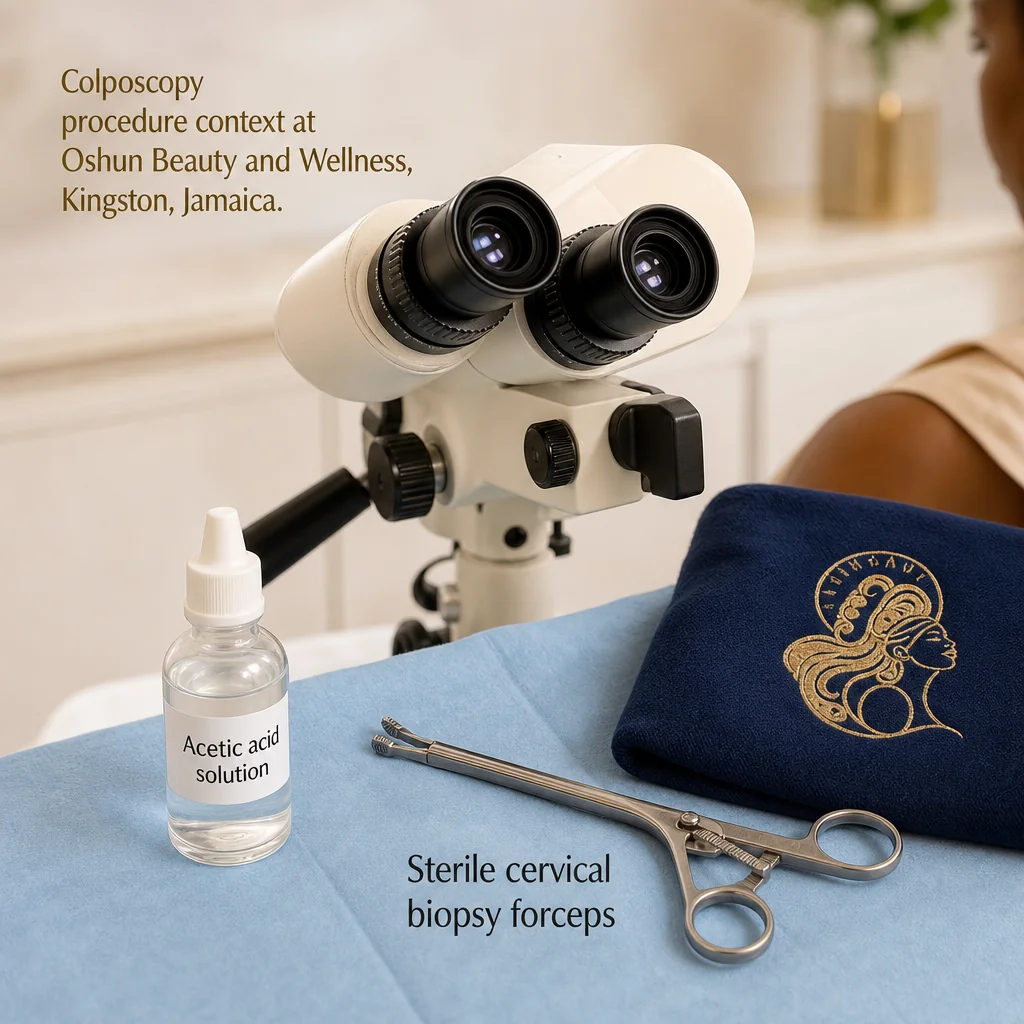
A speculum holds the vagina open, as at a Pap smear. A lit magnifier called a colposcope then looks at the cervix from outside your body; it does not go in. A colposcopy is a test, not a treatment.
- Why you were sent
- The usual reasons are abnormal cells on a Pap smear, a positive test for certain types of HPV, bleeding after sex, or a cervix that did not look healthy at an examination. HPV is a very common virus: almost everyone who has sex gets it at some point, and it usually clears.
- What it can show
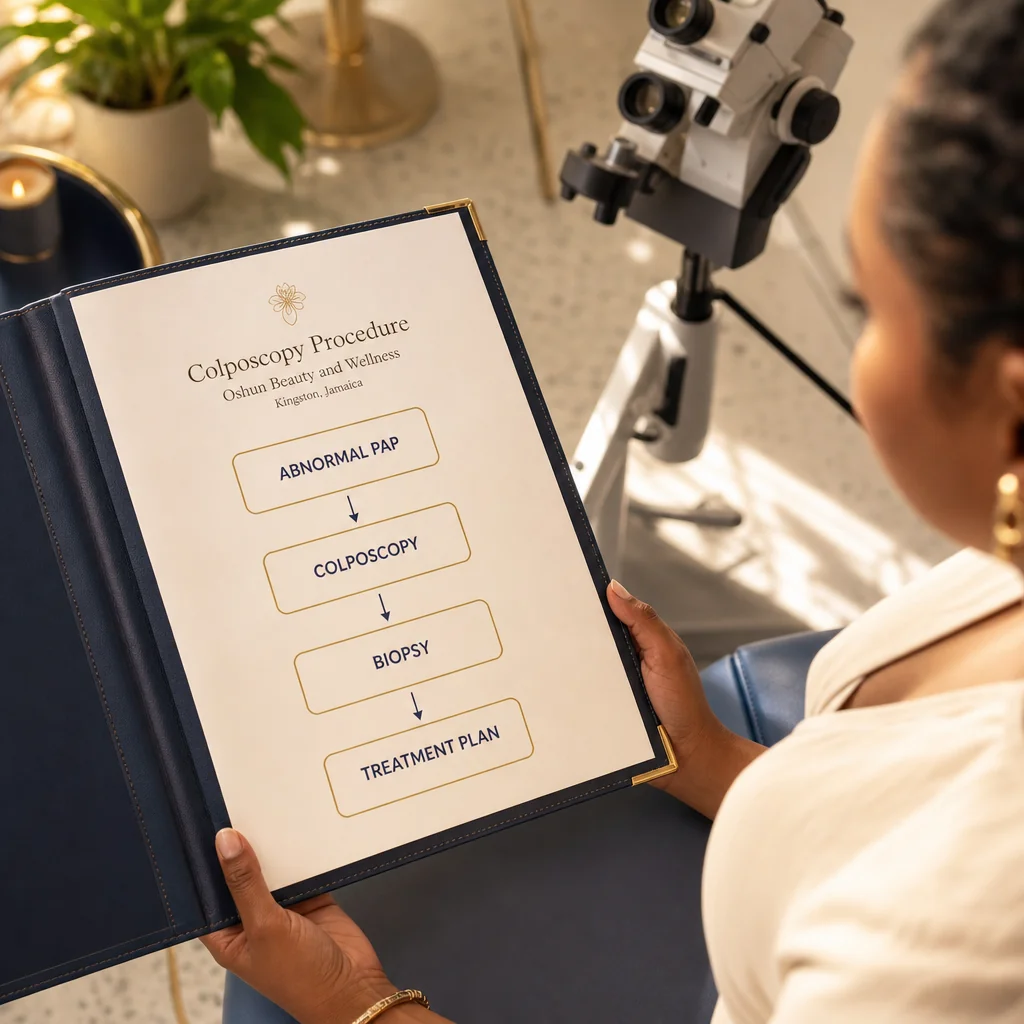
- Whether there are abnormal cells on your cervix, and how serious they are. If an area looks unusual, a sample, a biopsy, may be taken. A Pap smear cannot diagnose; a biopsy helps to.
The short version
What matters most.
Most abnormal results are not cancer, and mild changes usually clear on their own. So do not miss the follow-up.
Countries differ on when a colposcopy is advised. Bring your result. Dr. Rockhead will tell you whether you need one, and why.
02Medical Leadership
Who do you meet first?
Dr. Charles Rockhead, in person, at 9 Devon Road in Kingston. He reads your result with you, goes through your history and explains your options, including not going ahead. No copy of your result? Ask whoever did your test for one.

Dr. Charles Rockhead, Medical Director — Oshun Cosmetic Services, Kingston.
Dr. Charles Rockhead
Medical Director · Board-Certified OB/GYN · 30+ years of practice
Dr. Charles Rockhead is a board-certified Obstetrician and Gynaecologist with more than thirty years of practice in Kingston. He is the Medical Director of Oshun Cosmetic Services and the founding physician of Amadeo Medical Group, the parent clinical practice.
Read the clinic story · View Dr. Rockhead's LinkedIn
03The test itself
What happens at the colposcopy, and does it hurt?
i.
Getting ready
No sex, tampons, douching, vaginal creams or medicines for at least 24 hours before. We aim to book you outside your period. Tell us first if you are or could be pregnant, have a coil (IUD), or take a blood thinner. You may take paracetamol or ibuprofen beforehand if you can take them. Bring a panty liner, and allow about an hour for the whole visit.
ii.
The examination
You undress from the waist down and lie back with your legs supported. We put in a speculum and dab a vinegar or iodine liquid on the cervix to show any abnormal area. It may sting.
iii.
A biopsy, if one is needed
If an area looks unusual, we may take a sample about the size of a pinhead. You may feel a pinch or a cramp. More than one may be taken.
iv.
Pain, and your right to stop
The examination can be uncomfortable, and some women feel pain. Slow breathing helps, and you can ask us about a smaller speculum. You can ask us to stop at any time.
04Afterwards & results
Afterwards: your results, and when to call.
- What is normal
- Light bleeding and a dark discharge for a few days, or up to a week after a biopsy. Most women go straight back to work. Some feel dizzy or faint at first.
- What to avoid
- No sex, tampons, douching or swimming for one week.
- Results
- With no biopsy, ask what was seen before you leave. A biopsy result usually takes one to two weeks. Whatever it shows, Dr. Rockhead goes through it with you and writes the plan. No word after two weeks? Call us.
- What a result can mean
- Normal: back to regular Pap smears. Mild changes (CIN 1): usually no treatment and a repeat test within a year. Moderate or severe changes (CIN 2 or 3): treatment, though some CIN 2 is watched instead. These are not cancer, but can sometimes become it. Rarely the result is cancer; you are then referred to specialists.
- When to get help
- Call us straight away on (876) 676-6297 if bleeding is heavier than a heavy period or still going after a week, or if you have belly pain that painkillers do not ease or that keeps coming back, a fever or a smelly discharge. If we are closed or you cannot reach us, see another doctor or go to a hospital straight away.
05Risks
What are the risks, and what if treatment is needed?
- The risks
- A colposcopy carries very little risk. A biopsy can cause light bleeding, with a small risk of infection. Neither test makes getting pregnant harder.
- If treatment is needed
- Usually only for moderate or severe changes. The most common treatment, called LLETZ or LEEP, removes the abnormal cells with a heated wire loop, usually under a numbing injection. Its risks include infection, a narrowed cervix and, in about 2 in 100 women, a birth before 37 weeks in a later pregnancy; that risk rises with deeper or repeated treatment. Ask whether it is done at Oshun or elsewhere, and what it costs.
- If you are pregnant
- A colposcopy is safe in pregnancy, so tell us and come. A biopsy is usually taken only if cancer is suspected, and bleeding after one is more likely. Treatment usually waits until after the birth.
- Who should wait
- If your period is heavy on the day, call us: we may rebook, unless the bleeding is the reason you are coming. Tell us if you are being treated for an infection of the cervix, as we may wait until it has cleared.
06Cost & booking
How much does a colposcopy cost in Jamaica?
- What it costs
- Colposcopy is on our price list at an estimated US$400 to US$1,200. You get your own figure in writing at the consultation. The laboratory's biopsy fee may be extra; ask us.
- The consultation
- Consultations start at J$11,000.
- Where it is done
- At Oshun, 9 Devon Road, Kingston.
- Paying
- Cash, debit card, credit card or approved financing. Ask your insurer before you book whether your plan pays. We give you receipts to submit.
If this sounds right
The next step is a conversation, not a commitment.
Start with a consultation. Bring your result: Dr. Rockhead reads it with you and explains the next step before anything else is booked.
No obligation · Every consultation is in-person with Dr. Rockhead.