- Who it suits
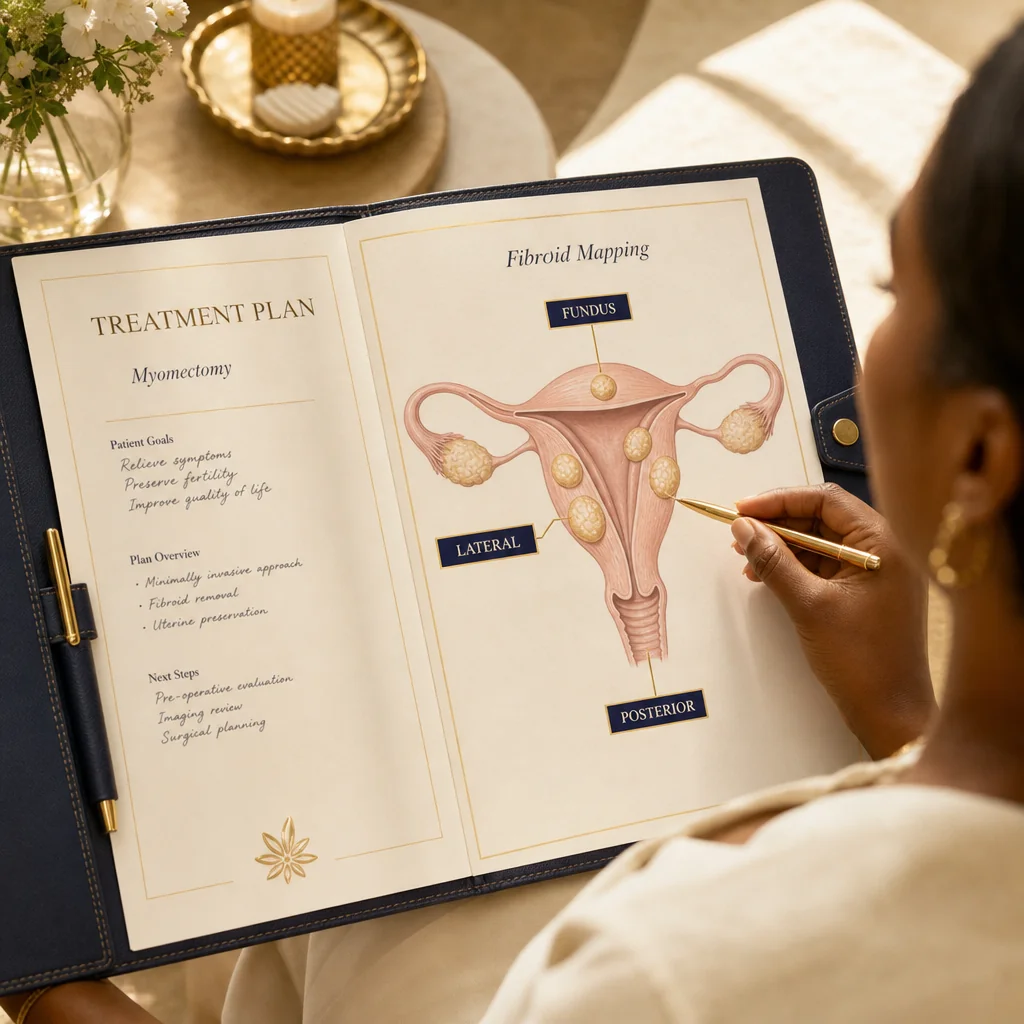
- Women whose fibroids cause real trouble, such as heavy bleeding, pain or pressure, and who want to keep their womb.
- Who should think again
- If your fibroids cause no symptoms, treatment is not always needed. If you are close to the menopause, know that fibroids usually shrink after it. And a fibroid that is growing fast needs prompt investigation to rule out a cancer, before any operation is planned. And tell Dr. Rockhead if you have a pelvic infection or a bleeding disorder, because either can rule this surgery out. And for some women, where the fibroids sit makes removing them riskier than a hysterectomy. Ask Dr. Rockhead whether that applies to you.
- If you want a baby
- Pregnancy is possible after this surgery. Don't start trying until Dr. Rockhead tells you it is safe to, and ask him for that date in writing. If your fibroids sat deep in the wall of the womb, you might need a caesarean, a C-section, so tell whoever looks after your pregnancy about this surgery.
- Risks
- Every operation carries risk. Fibroid removal carries a higher risk of blood loss, and scar tissue may form where the womb was cut. Open fibroid removal is major surgery, with a higher risk of infection and a longer recovery than keyhole surgery. Ask Dr. Rockhead what he would do if the bleeding could not be stopped, and whether that could mean removing your womb. The rarer complications, such as damage to the bladder or needing to change from keyhole to open surgery, are listed in the questions below.
- A hidden cancer, and what to ask
- What looks like a fibroid can turn out to be a cancer called a sarcoma, and there is no reliable way to tell before surgery. The US Food and Drug Administration estimates a hidden sarcoma is there in about 1 woman in every 225 to 580 having surgery for fibroids. It matters most in keyhole surgery, where a tool called a power morcellator may cut the fibroid into pieces to bring it out, because cutting can spread a hidden cancer. A power morcellator should not be used in women over 50 or past the menopause. So ask: will a power morcellator be used, why is that right for me, will it be used inside a containment bag that holds the pieces, and what are my other options?