Fibroid uterus too large for MIGS
Uteri exceeding the safe size for laparoscopic morcellation may need open myomectomy or hysterectomy.

Major Gynaecological Surgery at Oshun is performed by Dr. Charles Rockhead — surgical procedures including open abdominal hysterectomy, complex fibroid removal, prolapse repair, and other indications. Each surgical plan is individualised at consultation with full imaging and workup.
No obligation · Every consultation is in-person with Dr. Rockhead.
Dr. Rockhead
Performs your procedure personally
In person
Consultation before anything is booked
In writing
Your quote, given at consultation
Kingston
Clinic or accredited surgical centre
No obligation
You decide after the consultation
Questions answered privately
Every procedure at Oshun is reviewed and led by a board-certified Obstetrician and Gynaecologist. Dr. Rockhead is a physician first — the same one who treats women's health on the other side of his practice.
Three decades as a practicing OB/GYN at Amadeo Medical Group, the parent clinical practice. Every Major Gynaecological Surgery plan is reviewed by a physician who has cared for women through pregnancy, surgery, perimenopause, and post-natal recovery.
Every Major Gynaecological Surgery patient leaves consultation with a written plan: areas, technique, timing, recovery, cost. Returning patients refine the same plan rather than starting from scratch every visit.
Oshun's approach favours conservative, considered care over aggressive intervention. Decisions are made in conversation with you, options are presented in plain language, and consent is informed at every step.
Most first-time patients arrive with the same set of unspoken questions. They are answered below in the order most people think them — from "how much will I need" to "what if I'm pregnant."
Major gynaecological surgery refers to procedures requiring open abdominal incision (laparotomy) or extensive operative time and recovery. It includes cases that minimally-invasive approaches cannot safely handle.
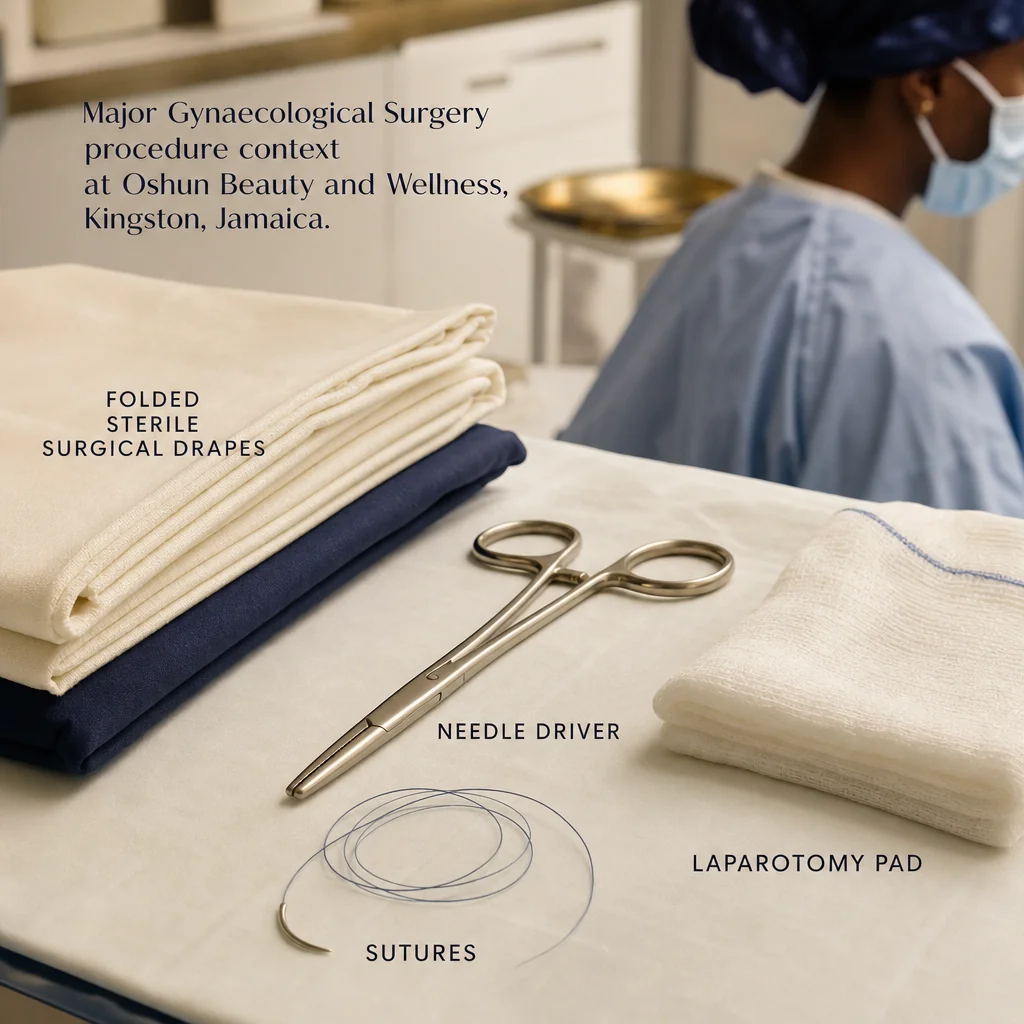
The honest version
Why major gynaecological surgery sometimes disappoints.
Major surgery disappoints when patients weren't told what to expect from the recovery curve, when post-operative complications surface, or when the indication didn't warrant the size of operation.
Major open surgery is a different recovery than minimally-invasive — longer hospitalisation, more post-operative pain, slower return to function. Patients prepared for that reality cope much better than patients who expected a "quick recovery."
The other consideration is whether major surgery was truly the right size of intervention. Some cases get "upsized" because the surgeon's default is open. The consultation should genuinely test whether minimally-invasive could work.
At Oshun, we don't run that model. Major Gynaecological Surgery here is physician-led from consultation through follow-up, with a written plan in your hands and a follow-up visit on the calendar before you leave.
Every major gynaecological surgery at Oshun is planned and performed by Dr. Rockhead personally, with multidisciplinary input where indicated (oncologic, urologic, colorectal).

Dr. Charles Rockhead, Medical Director — Oshun Cosmetic Services, Kingston.
Medical Director · Board-Certified OB/GYN · 30+ years of practice
Dr. Charles Rockhead is a board-certified Obstetrician and Gynaecologist with more than thirty years of practice in Kingston. He is the Medical Director of Oshun Cosmetic Services and the founding physician of Amadeo Medical Group, the parent clinical practice.
A Major Gynaecological Surgery visit at Oshun follows a clear sequence — from consultation through the procedure itself through follow-up. Here is what happens, step by step.
Before any Major Gynaecological Surgery is scheduled, you meet Dr. Rockhead in person at 9 Devon Road. He reviews your medical history, examines you as appropriate, and explains the options — including the option not to proceed. You leave with a clear written plan and a quote.
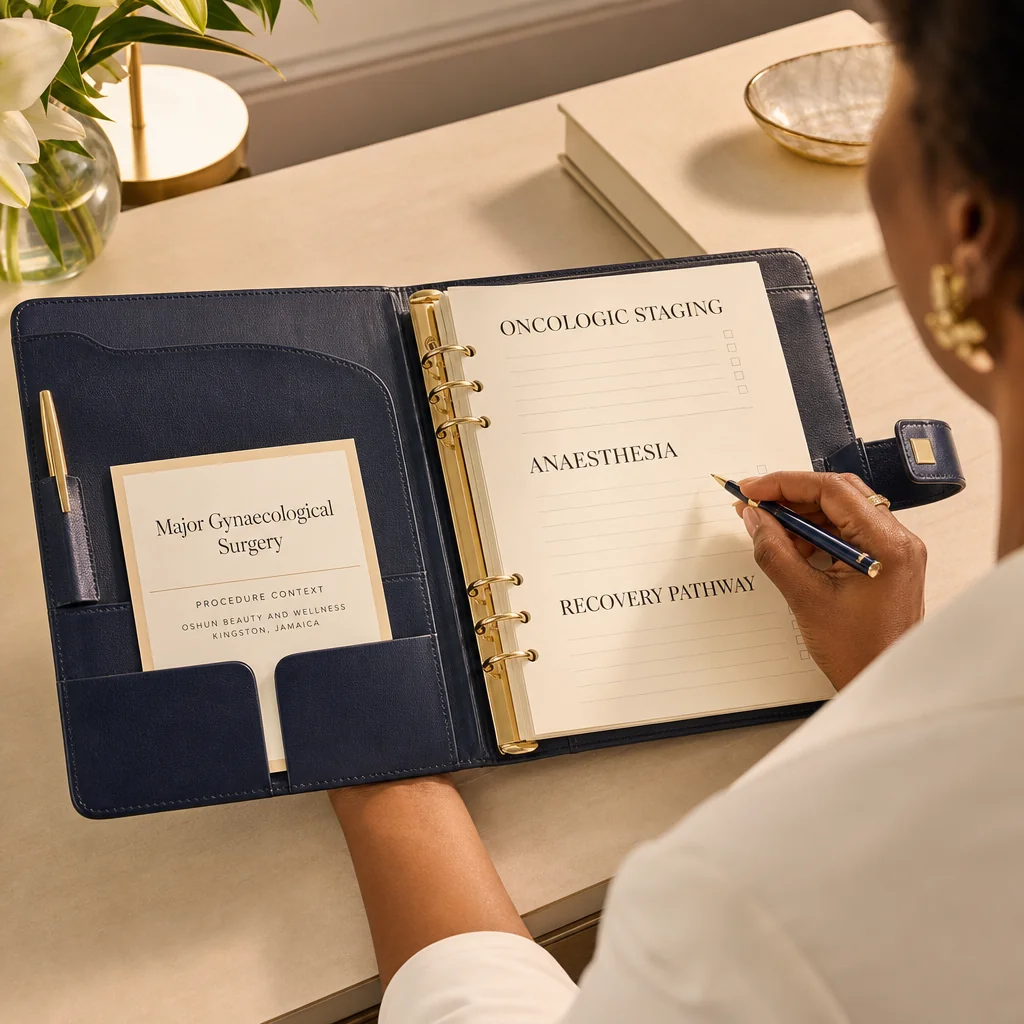
Stop blood thinners 7–10 days before; stop smoking 4+ weeks before; pre-op labs, imaging, ECG, medical clearance. Multidisciplinary planning for oncologic cases.
Under general anaesthesia at a hospital, Dr. Rockhead performs the planned procedure through an abdominal incision (low transverse or vertical midline). The specific operative steps depend on the indication. The incision is closed in layers; an epidural may remain in place for post-operative analgesia.
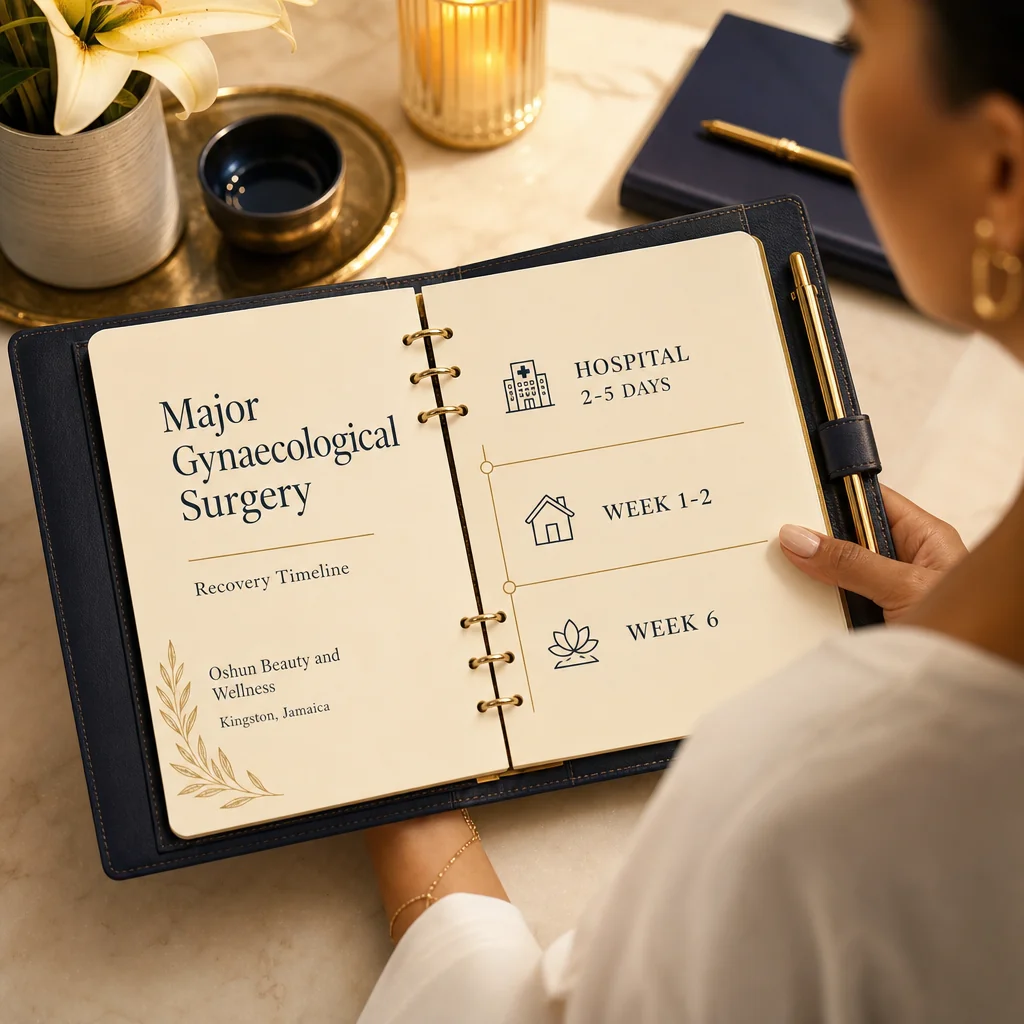
In-hospital pain management (often including epidural), early mobilisation, DVT prophylaxis, bowel function monitoring. Wound care for abdominal incision; staples or sutures removed around 1–2 weeks. Wound check at 1–2 weeks; further follow-up tied to specific indication.
Recovery is staged: in-hospital first, then home recovery over 4–8 weeks.
Major Gynaecological Surgery isn't a one-size category — the right approach depends on your specific situation. Below are common patient profiles we see. If one sounds like you, an in-person consultation at 9 Devon Road is the next step.
Uteri exceeding the safe size for laparoscopic morcellation may need open myomectomy or hysterectomy.
Many gynaecological cancers require extensive surgery including staging and lymph-node dissection.
Severe endometriosis affecting bowel or urinary tract may require combined surgery.
Complex prolapse cases sometimes require abdominal sacrocolpopexy with paravaginal repair.
If this sounds right
Every Major Gynaecological Surgery patient at Oshun starts with a consultation. Twenty minutes, in-person at 9 Devon Road, with Dr. Rockhead. No procedure is scheduled, no quote is signed, no pressure either way. You leave with a plan and a price — or you leave with neither.
No obligation · Every consultation is in-person with Dr. Rockhead.
Open any of them. We've written each answer the way Dr. Rockhead would actually say it — not the way a brochure would.
Major gynaecological surgery is appropriate when minimally-invasive truly isn't — not as a default.
No obligation · Every consultation is in-person with Dr. Rockhead.