01The basics
What is a hysteroscopy, and is it the same as an HSG?
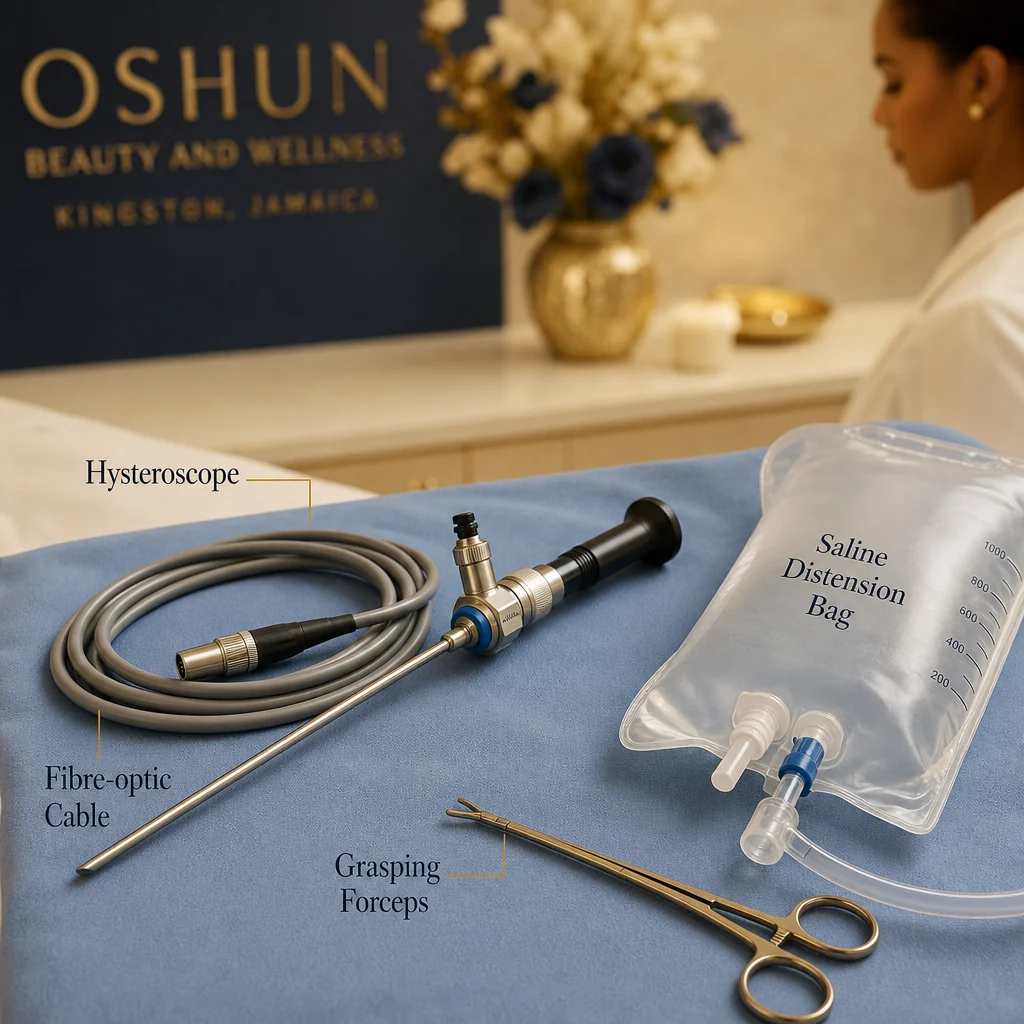
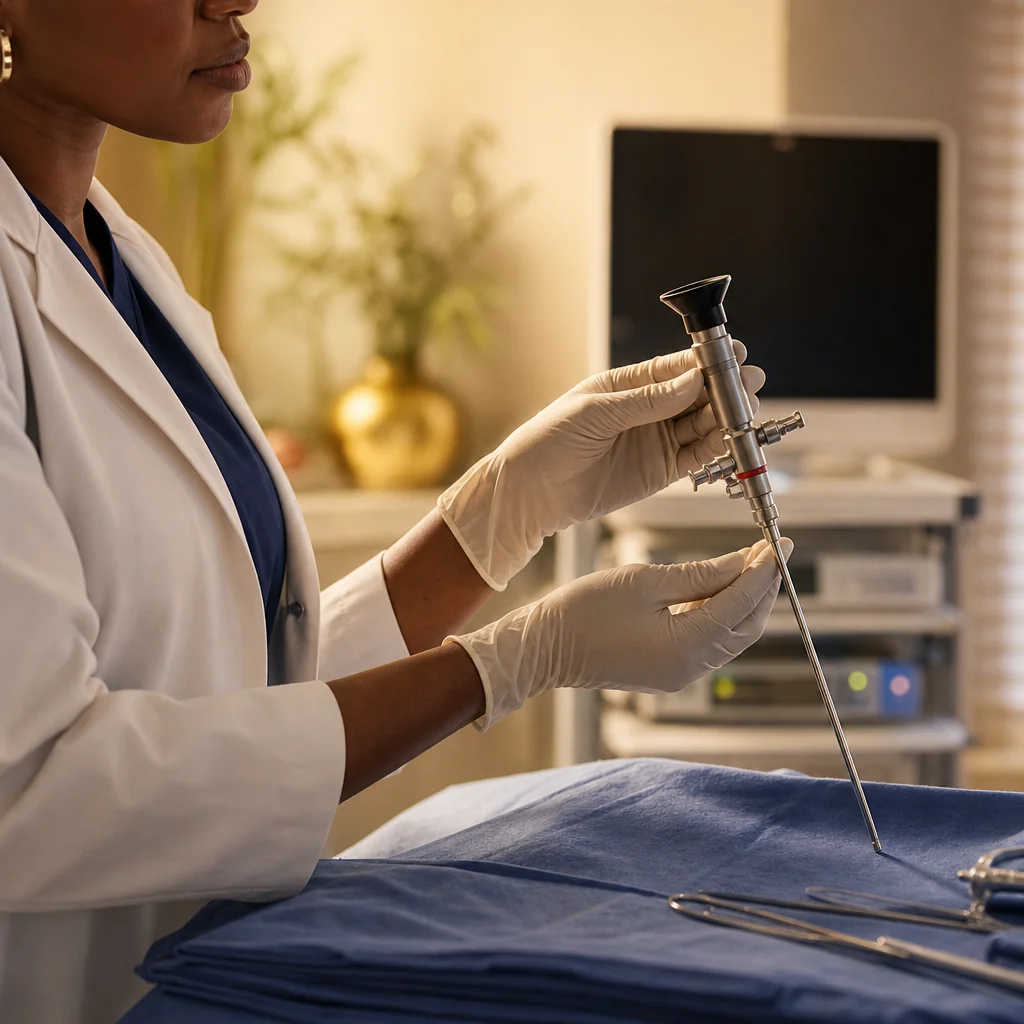
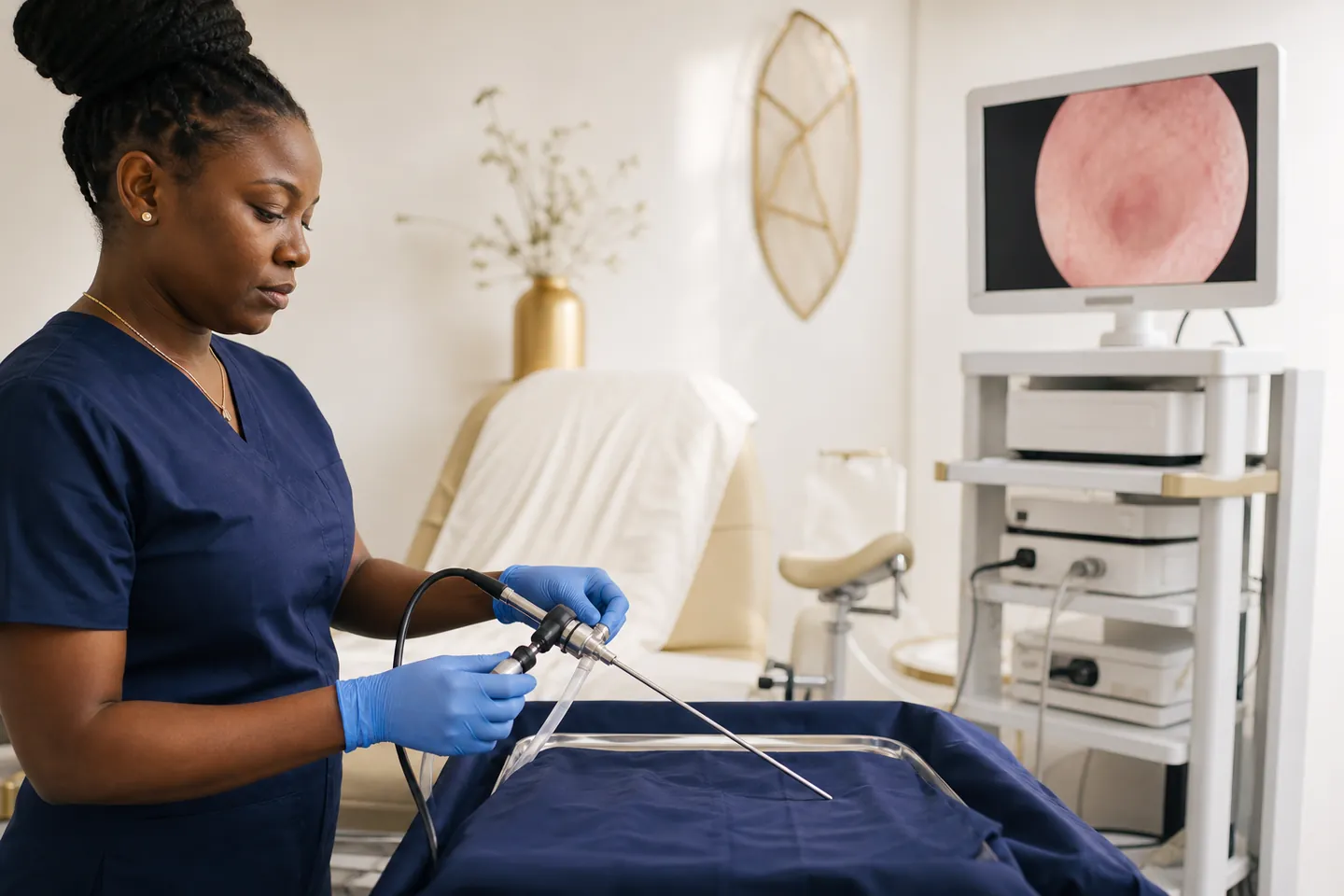
A thin tube with a small camera is passed through the vagina and the opening of the womb (the cervix). Salt water is run in so the inside can be seen on a screen. Nothing is cut to get there.
- Hysteroscopy or HSG?
- An HSG is an X-ray with dye that shows whether the fallopian tubes are open. A hysteroscopy sees the inside of the womb and only the openings of the tubes. An HSG is not on our price list, so if your doctor asked for one, book that test with a radiology department.
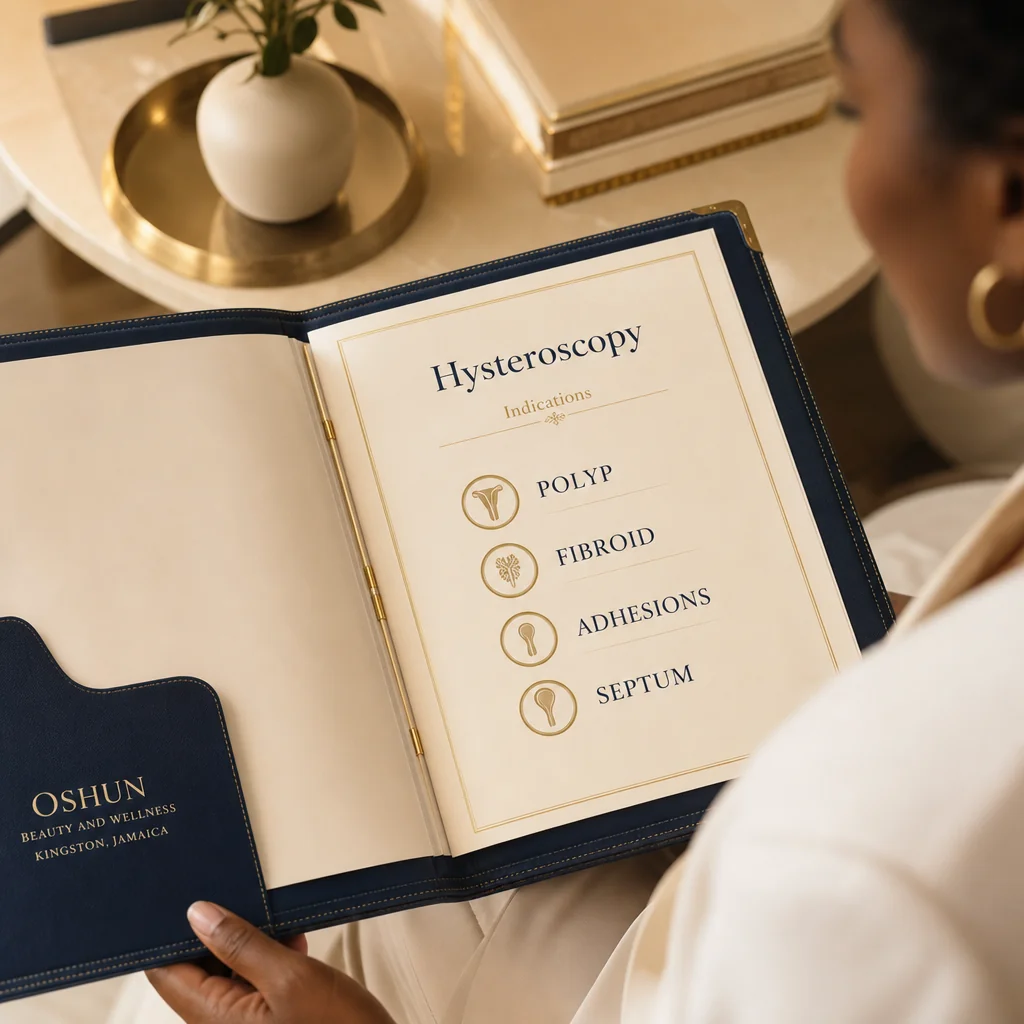
- What it can find
- The cause of heavy periods, bleeding between periods, bleeding after the menopause, or repeated miscarriage. It also shows a scan's finding close up.
- What can be treated through it
- Polyps (small growths), small fibroids inside the womb, scar tissue, a coil whose threads are lost, and tissue left after a pregnancy loss. Nothing is removed unless you agree. For other fibroids, see fibroid removal.
Before you decide
What to know first.
To check whether the fallopian tubes are open, the test is an HSG. In fertility care, British guidance (NICE) keeps a hysteroscopy for when a womb problem is suspected.
Polyps rarely return, and scar tissue sometimes needs more than one procedure. Dr. Rockhead talks you through what to expect for you before anything is booked.
02Medical Leadership
Who do you meet first?
Dr. Charles Rockhead, in person, at 9 Devon Road in Kingston. He goes through your history, examines you if needed and explains your options, including not having a hysteroscopy. Bring any scan report or doctor's letter you have. He carries it out himself. Ask him whether you can be awake or asleep.
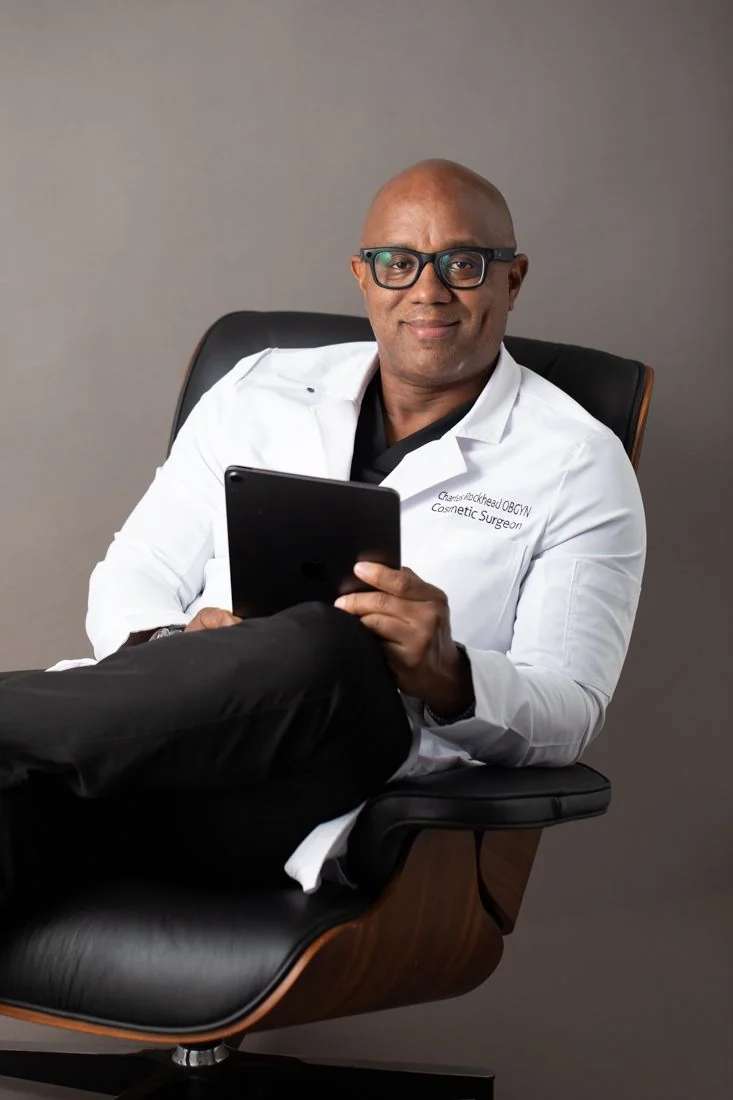
Dr. Charles Rockhead, Medical Director — Oshun Cosmetic Services, Kingston.
Dr. Charles Rockhead
Medical Director · Board-Certified OB/GYN · 30+ years of practice
Dr. Charles Rockhead is a board-certified Obstetrician and Gynaecologist with more than thirty years of practice in Kingston. He is the Medical Director of Oshun Cosmetic Services and the founding physician of Amadeo Medical Group, the parent clinical practice.
Read the clinic story · View Dr. Rockhead's LinkedIn
03The day itself
What happens on the day, and how much does it hurt?
i.
Getting ready
Do not have a hysteroscopy if you could be pregnant: use contraception or avoid sex from your last period until the test. We aim to book it outside your period. For an awake test, eat and drink as normal, and the NHS says ibuprofen or paracetamol an hour before can help. Before an anaesthetic, we tell you when to stop eating and which medicines to take. Tell us at your consultation about any blood thinner, aspirin included: you may need to stop it a week or more before.
ii.
The test
The look itself usually takes 15 to 30 minutes, and treatment takes longer. A tightly closed cervix can mean the awake test has to stop.
iii.
Pain, and your right to stop
The cervix is numbed for the awake test, and the numbing can itself hurt. It may still feel like period pain, and for many it is very painful. That is hard to predict: in a UK survey of over 5,000 women, a third rated their pain above 7 out of 10. A sample can hurt more. You can stop it at any time, so agree a signal first. British gynaecologists' own leaflet says you can choose an anaesthetic instead. Ask what we can offer you before anything is booked.
iv.
Going home
Awake, you usually go home the same day. After an anaesthetic or sedation (medicine that makes you drowsy), someone must collect you and stay with you, and no driving, cooking or minding children alone for at least 24 hours.
- Tell us first
- Tell us before the day if your periods are painful enough to make you faint, if a Pap smear or an internal examination has been painful, or if you have been through sexual violence or another trauma. The plan can be changed, and an anaesthetic may suit you better.
04Afterwards & results
What is recovery like, and when do you get results?
- What is normal
- Cramps like period pain for a day or two, light bleeding or spotting for up to a week, and a watery discharge for some weeks.
- What to avoid
- No sex, tampons or swimming for one to two weeks, and no exercise until the pain and bleeding have stopped.
- Time off
- After an awake test, most women are back at work the next day. After treatment under anaesthetic, allow one to three days, and longer, with stricter limits, if a fibroid was removed.
- Results
- You are told what was seen on the day. If a sample is taken, the result usually takes one to two weeks, and we see you two to four weeks after the test. If you are trying for a baby, ask when it is safe to start; after treatment you may need to wait longer.
- When to get help
- Call us urgently on (876) 676-6297 if bleeding gets heavier or is not light after a few days, if tummy pain gets worse and painkillers do not help, or if you have a high temperature or a smelly discharge. If we are closed or you cannot reach us, go to the nearest emergency department.
05Risks, and is it for you
What are the risks, and who should not have a hysteroscopy?
- The risks
- Most hysteroscopies are quick and safe. The main risks: a hole in the wall of the womb, in fewer than 1 in 200 awake tests that only look and slightly more often when something is removed. It often heals, sometimes needs an operation, and rarely damages nearby organs. Infection, in fewer than 3 in 100 women. Heavy bleeding. Damage to the cervix. Feeling faint or sick. The body can absorb too much of the fluid used.
- Extra risks with treatment or an anaesthetic
- Removing tissue can scar the lining of the womb. A blood clot is rare, and so are serious problems from a general anaesthetic.
- Who should not have it
- We don't do a hysteroscopy if you are or could be pregnant, have a pelvic infection now, or have known cervical cancer. Tell us if you are ill in the week before, with a fever, a cold or a herpes outbreak. If you are bleeding very heavily on the day, call us before you come: it can make it hard to see.
06Cost & booking
How much does a hysteroscopy cost in Jamaica?
- What it costs
- Hysteroscopy is on our price list at an estimated US$4,000 to US$10,000. You get your own figure in writing at the consultation. Ask what it covers: the theatre, the anaesthetic, any lab test and the follow-up visit.
- The consultation
- Consultations start at J$11,000.
- Where it is done
- An awake hysteroscopy that only looks is done at 9 Devon Road. Treatment under anaesthetic is done at an accredited surgical centre. Ask which one.
- Paying
- Cash, debit card, credit card or approved financing. Ask your insurer before you book whether your plan pays. We give you receipts to submit.
If this sounds right
The next step is a conversation, not a commitment.
Start with a consultation. You leave with a written plan and a price, and nothing is booked until you say so.
No obligation · Every consultation is in-person with Dr. Rockhead.