Endometrial ablation destroys the lining of the womb to make heavy periods lighter. There is no cut, and the womb stays. It is for women who are sure they want no more children: it does not prevent pregnancy, and a pregnancy afterwards is dangerous. Our estimate is US$3,000 to US$6,000. You start with a consultation with Dr. Charles Rockhead, from J$11,000.
No obligation · Every consultation is in-person with Dr. Rockhead.
Endometrial Ablation at a glance
Dr. Rockhead
Your consultation is with him
In person
Consultation before anything is booked
US$3,000 to US$6,000
Our estimate, quoted in writing
Kingston
Consultations at 9 Devon Road
No obligation
You decide after the consultation
WhatsApp
Questions answered privately
Every visit, without exception
Four things that are true of every visit
A consultation first
You meet Dr. Rockhead in person before anything is booked.
Every choice explained
He goes through your choices with you, and treating nothing is one of them.
Your womb stays
The lining is destroyed. The womb is not removed.
A written plan
It covers the procedure, your recovery and the cost.
Treatment Details
Heavy periods, and your family is complete?
Heavy periods are common, and they are a good reason to see a doctor. Other treatments are usually tried first, and ablation is one of the choices after that, for a woman who has finished having children. Bring the name of anything you have tried, and how long you used it. If you have tried nothing, come anyway. Questions first? Message us on WhatsApp.
What is endometrial ablation, and how well does it work?
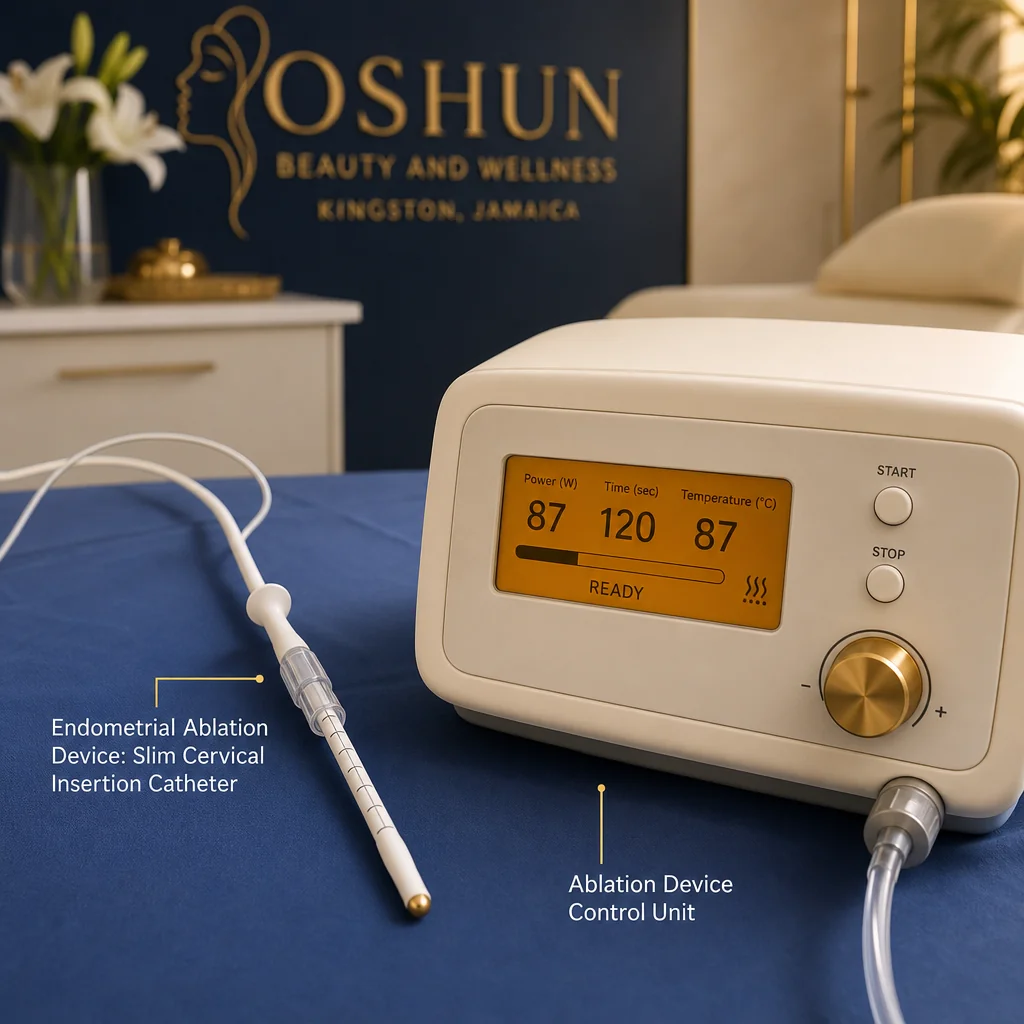
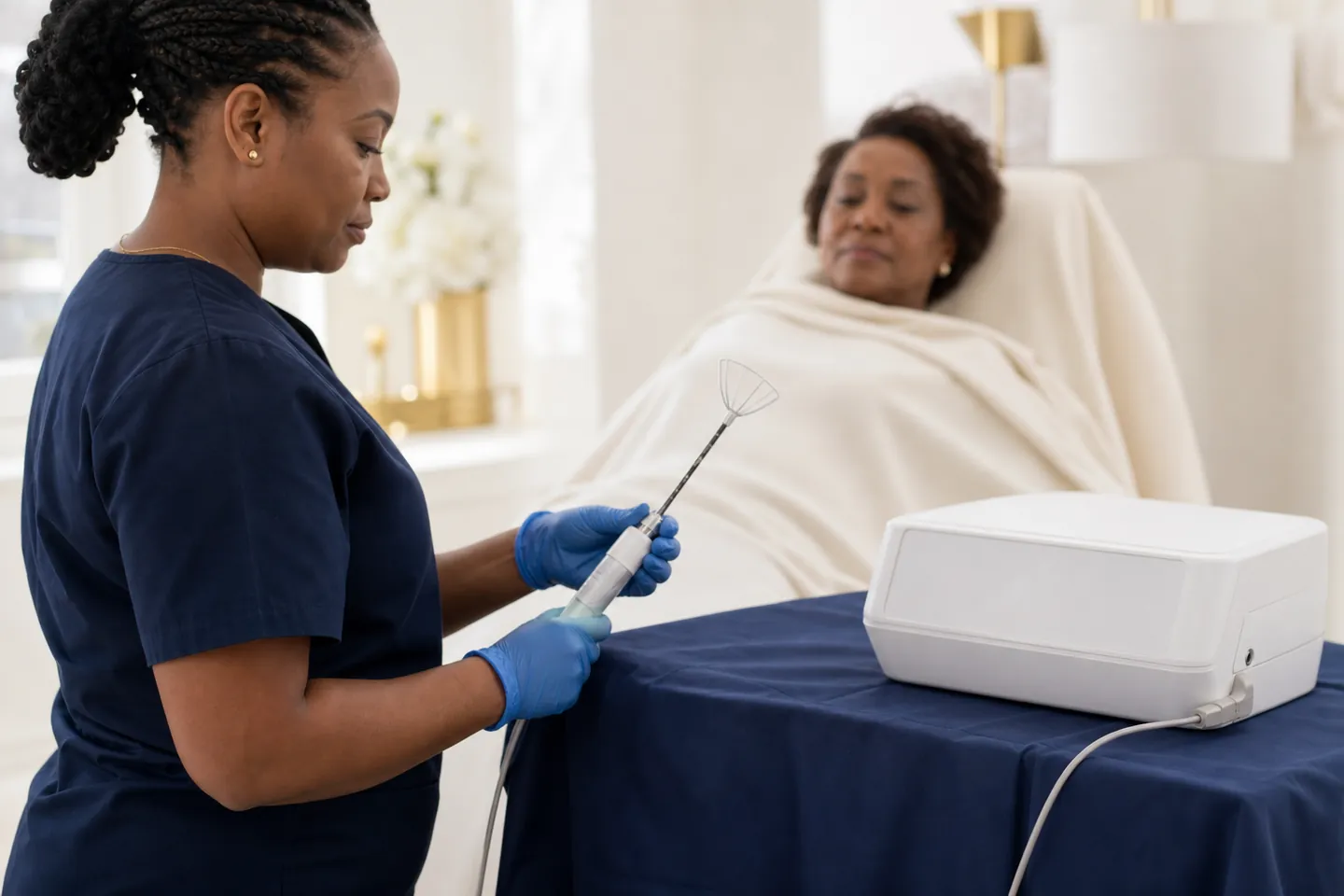
A thin device is passed through the vagina and the neck of the womb. It destroys the lining of the womb with heat or with cold. The lining heals as scar tissue, which usually makes periods lighter or stops them.
What to expect
Most women bleed less afterwards. For up to 30 to 50 in every 100, periods stop altogether; that is more likely in older women. Dr. Rockhead talks you through what to expect for you before anything is booked.
How soon
It may take a few months to show. If your periods are still heavy after three months, tell us.
With fibroids
It depends on their size, on the shape of the inside of your womb, and on the device. A scan or a camera look shows what you have, so bring your last ultrasound report.
Contraception
It does not prevent pregnancy. It treats heavy bleeding.
Read this first
You can still get pregnant, and it is dangerous.
After an ablation a pregnancy is unlikely, but it can happen, and it is dangerous for you and the baby. You need reliable contraception until the menopause, or sterilisation, yours or your partner's.
The risks of such a pregnancy include miscarriage, early birth, stillbirth and a placenta that will not come away, which can be life-threatening. If your periods stop, a missed period can no longer warn you: ask us what to watch for. If there is any chance you want another child, ablation is not for you.
02Who decides
Who decides whether it is right for you?
You and Dr. Charles Rockhead, at 9 Devon Road in Kingston. He goes through your history, examines you and explains your choices. He carries out the procedure himself. Ask where it takes place, and with which device. Nothing is booked until you decide.
Dr. Charles Rockhead, Medical Director — Oshun Cosmetic Services, Kingston.
Dr. Charles Rockhead
Medical Director · Board-Certified OB/GYN · 30+ years of practice
Dr. Charles Rockhead is a board-certified Obstetrician and Gynaecologist with more than thirty years of practice in Kingston. He is the Medical Director of Oshun Cosmetic Services and the founding physician of Amadeo Medical Group, the parent clinical practice.
The treatment itself takes a few minutes, and most women go home the same day.
i.
Checks first
In the weeks before, a sample of the womb's lining is usually taken to rule out cancer: it is a check done before ablation, not a sign that something was found. The womb is looked at with a scan or a camera, and you have a pregnancy test. Tell us every medicine, herb and bush tea you take, above all anything that thins the blood, and never stop one unless a doctor tells you to.
ii.
Awake or asleep
It can be done awake, with a numbing injection round the neck of the womb, or asleep under a general anaesthetic. Awake, expect period-like cramps that are worse while the lining is treated. You can ask for it to stop.
iii.
Going home
If you were awake you can leave soon after, but bring someone to drive you: many women prefer not to drive. After a general anaesthetic you usually stay three to four hours, then an adult takes you home and stays with you for 24 hours. Do not drive for at least 24 hours.
iv.
The first weeks
Cramps for a day or two, sometimes longer. A watery or bloody discharge that can last several weeks. Use pads, not tampons. We ask you to avoid sex, tampons and swimming for two to four weeks, and until the discharge has stopped. When you have sex again, use reliable contraception every time.
04Recovery
When to get help, time off and check-ups.
Go to a hospital at once
For pain across the lower belly that does not ease; for a fever with chills or feeling sick; or for chest pain, trouble breathing, coughing up blood or a painful swollen leg. Say you have had an endometrial ablation, and when.
Call us straight away
On (876) 676-6297, for heavy bleeding (for example more than one pad an hour for several hours) or bleeding that goes on, a discharge that smells bad, a fever, strong cramps, or burning, trouble or going often when you pass urine. We are closed at night and from Friday to Sunday. If we are closed, do not wait for us: go to a hospital.
Time off work
Most women need two to five days.
Check-ups
We see you at two to four weeks, and review your bleeding at three and six months.
Years later
Tell a doctor about new pain with your periods, and about any bleeding after the menopause. Ablation leaves scarring inside the womb, which can make a later cancer of the womb harder to find, so always say that you have had an ablation.
05Risks
The risks, and who should not have it.
The risks
One large hospital in England lists an infection of the womb or bladder as a common risk. The others are uncommon or rare, and some could be life-threatening: a hole or deep burn in the womb, a hole or burn in the bowel or bladder, a burn to the vagina, a serious infection, heavy bleeding, a blood clot, an air bubble in the blood, and more surgery, even a hysterectomy, because of a complication. Sometimes the treatment cannot be finished. Months or years later: blood trapped in the womb, or new pain at period time.
Who should not have it
It is not for you if you want a child now or later, are pregnant, are past the menopause, or have had an ablation before. Nor with cancer, known or suspected, of the womb, cervix or ovaries, or pre-cancer of the womb's lining; with bleeding nobody has examined; with an infection; or with a coil in place. A womb that is too large or misshapen for the device rules it out. So does a classical caesarean (a cut up and down in the upper part of the womb) or other surgery that thinned the wall of the womb. Long-term steroid medicines (not asthma inhalers) can rule it out: tell us, and do not stop them.
Your other choices
Other treatments, removing fibroids, a hysterectomy, or no treatment at all. A hysterectomy is a bigger operation.
06Cost & booking
How much does endometrial ablation cost in Jamaica?
What it costs
We estimate US$3,000 to US$6,000. Your written quote lists the device, the anaesthetic and your follow-up.
The consultation
From J$11,000, in person, with Dr. Rockhead.
When we are open
Monday and Wednesday, 10 AM to 6 PM. Tuesday and Thursday, 10 AM to 4 PM. Closed Friday to Sunday.
Paying
Cash, debit card, credit card or approved financing. Whether insurance pays depends on your plan, so check before you book.
If this sounds right
The next step is a conversation, not a commitment.
Book a consultation. Bring any scan reports you have.
No obligation · Every consultation is in-person with Dr. Rockhead.
The honest answers
Two quick answers.
Tap either to open it.
Can I get pregnant after endometrial ablation?
It is unlikely, but yes, and it is dangerous for you and the baby. You need reliable contraception until the menopause, or sterilisation. If you may want a child, ablation is not for you.