01The annual exam 101
What is an annual gynaecology exam, and what does it cover?
It is a visit with a gynaecologist once a year, whether or not anything is wrong. You talk through your periods, contraception, sex, the menopause and anything that worries you, and your blood pressure and weight are checked.
- Tests that are due
- Screening tests are part of the visit when they are due for you, such as a Pap smear, which looks at cells from the cervix, the neck of the womb, for early changes that could lead to cancer.
- The examinations
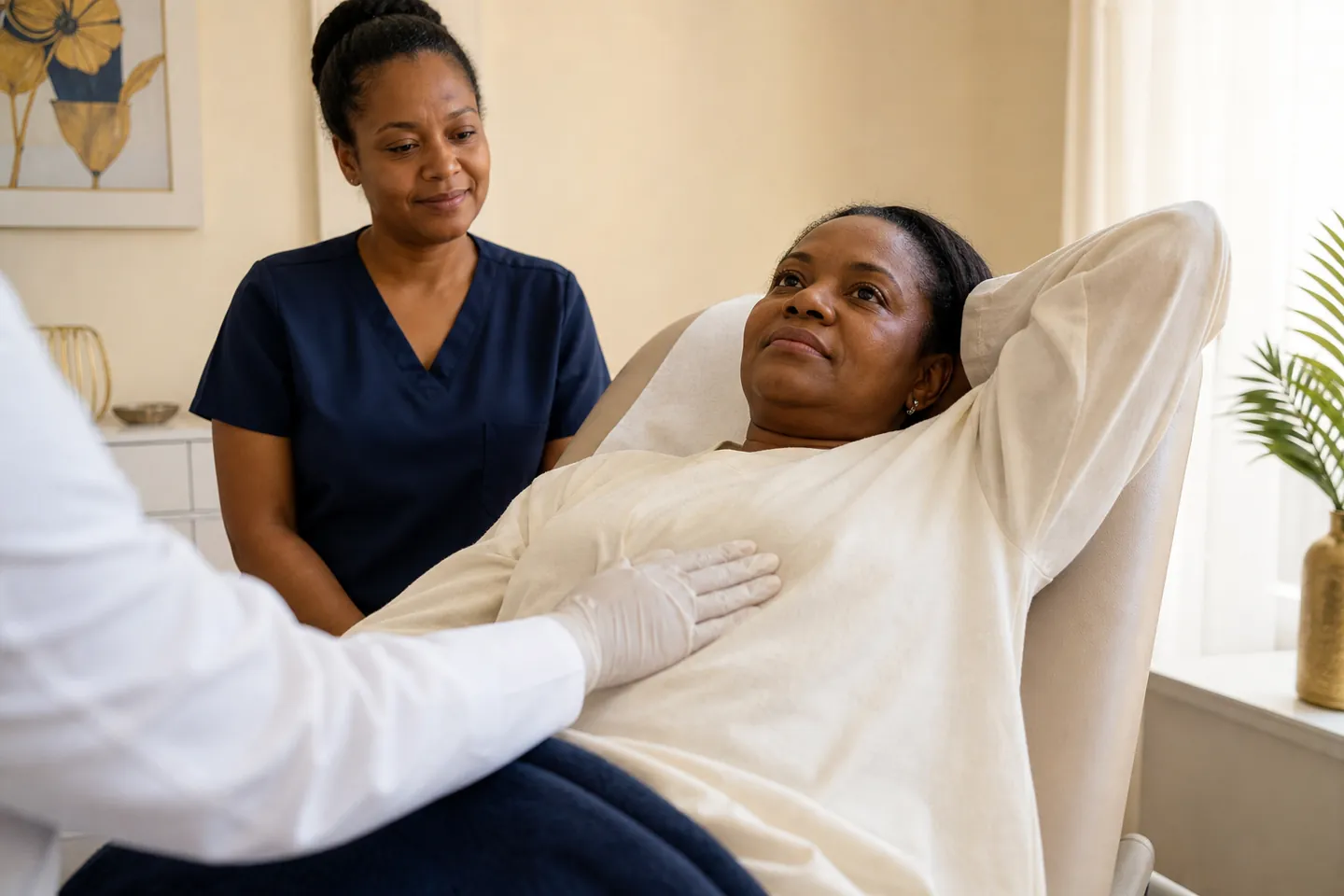
- A breast examination and an internal (pelvic) examination can be part of the visit, but neither is automatic. Dr. Rockhead explains what each would be for, and you decide.
Good to know
Not every test is due every year.
Most women do not need a Pap smear every year once their results are normal.
Which tests are due depends on your age and your past results. Some women do need testing more often, and chapter 05 says who.
A new symptom is worth a visit, even after a normal result.
02Medical Leadership
Who will you see at Oshun?
Dr. Charles Rockhead, a gynaecologist. Your visit is with him, in person, at 9 Devon Road in Kingston. You can bring someone with you for the conversation.

Dr. Charles Rockhead, Medical Director — Oshun Cosmetic Services, Kingston.
Dr. Charles Rockhead
Medical Director · Board-Certified OB/GYN · 30+ years of practice
Dr. Charles Rockhead is a board-certified Obstetrician and Gynaecologist with more than thirty years of practice in Kingston. He is the Medical Director of Oshun Cosmetic Services and the founding physician of Amadeo Medical Group, the parent clinical practice.
Read the clinic story · View Dr. Rockhead's LinkedIn
03Your visit
What happens at a gynaecology exam?
i.
Getting ready
Book for a day when you are not on your period, and call us to move the visit if it arrives. For two days before a Pap smear, don't put tampons, creams, medicines or lubricants in the vagina, don't douche, and don't have vaginal sex.
ii.
The conversation
The visit starts with a conversation. Say then, while you are still dressed, if you have pain or bleeding, or if an examination has been painful or frightening for you before.
iii.
The examination
If you agree to an internal examination, you undress from the waist down and lie back with your knees bent. A speculum, a smooth instrument, is gently opened inside the vagina so the cervix can be seen, and the doctor may feel the womb and ovaries with two fingers inside and a hand on your belly. If a Pap smear is due, a soft brush collects a few cells for a laboratory.
iv.
Afterwards
A little spotting should stop within a few hours.
- Does it hurt?
- It does not usually hurt, but some women find it uncomfortable or painful. Say if it hurts: you can ask for a smaller speculum, and you can ask to stop at any time.
04Results & follow-up
What happens after your exam?
- Your results
- Results usually take one to three weeks. You get yours in writing, with the next step if there is one. If you have heard nothing after three weeks, call us.
- An abnormal Pap result
- It does not mean you have cancer, but do not skip the next step. Our Pap smear page explains what each result means.
- When to come back
- For your next yearly check-up, or sooner if something new worries you. Chapter 05 lists the symptoms that should not wait.
- When to call us
- Call (876) 676-6297 if you bleed heavily after the test, or if spotting has not stopped after a few hours. If we're closed or you can't reach us, see a doctor.
05When not to wait
Which symptoms should not wait, and who needs testing more often?
- When to book now
- Don't wait for a yearly visit if you have bleeding between periods, during or after sex, or after the menopause; unusual discharge; pain during sex or in the pelvis or lower belly; or a lump in the breast or armpit, or a change in the nipple or the skin of the breast. All of these should be checked. Any bleeding after the menopause should be seen, even a small amount, even once.
- Who needs testing more often
- Women with HIV or a weakened immune system, and women who have had an abnormal result or treatment to the cervix. Tell Dr. Rockhead, because the usual gaps between tests do not apply to you.
- After the menopause
- Bring your menopause questions to the visit. You still need testing after the menopause, and past 65 you may stop only after regular normal results.
- If you are pregnant
- Tell us when you book. A Pap smear is safe in pregnancy, but a routine test may wait until about three months after your baby is due. A repeat test after an abnormal result need not wait.
- Breast checks
- A doctor's breast examination is not a mammogram, which is a breast X-ray. If you are 40 or over, ask about one: the US Preventive Services Task Force advises a mammogram every other year from 40 to 74.
06Cost & booking
How much does it cost to see a gynaecologist in Jamaica?
- A consultation
- Consultations with Dr. Rockhead start at J$11,000.
- The annual exam
- The full annual gynaecology exam, with a breast examination, is estimated at US$250 to US$500.
- A Pap smear
- Priced as the test fee plus the laboratory's fee.
- Your own figure
- Ask us on WhatsApp which of these applies to you. You get your figure in writing when you book.
- Paying
- Cash, debit card, credit card or approved financing. Whether a health plan pays depends on the plan, so check with your own insurer. We give you an itemised receipt.
If this sounds right
The next step is a conversation, not a commitment.
Bring your questions and any earlier results.
No obligation · Every consultation is in-person with Dr. Rockhead.