Fibroids at Oshun · Kingston, Jamaica

Fibroid treatment
in Kingston, Jamaica.

Uterine fibroids are common, non-cancerous growths in or around the womb that can cause heavy or painful periods, pelvic fullness and lower back pain. At Oshun in Kingston, Jamaica, fibroids are assessed and treated by Dr. Charles Rockhead, Oshun's fibroids specialist and a board-certified obstetrician and gynaecologist. Every plan begins with an in-person consultation.

No obligation · Every consultation is in-person with Dr. Rockhead. Common questions · Call +1 (876) 676-6297

Fibroid treatment at a glance

Every visit, without exception

Four things that are true of every visit


Care by an OB/GYN

At Oshun, fibroids are assessed by a board-certified Obstetrician and Gynaecologist. Gynaecology is Dr. Rockhead's own field.


30 years caring for women

Three decades as a practicing OB/GYN at Amadeo Medical Group, the parent clinical practice. Your plan comes from a physician who has cared for women through pregnancy, surgery, perimenopause, and post-natal recovery.


Written plan first

Every fibroid patient leaves consultation with a written plan: the options that fit you, timing, recovery, cost.


Conservative, considered

Oshun favours conservative, considered care over aggressive intervention. Options are presented in plain language, and consent is informed at every step.

Treatment Details

The facts about fibroids and their treatment, in plain language.

The questions most women arrive with are answered below.

Last updated: · The medical facts on this page come from published NHS patient guidance on fibroids, heavy periods, hysterectomy and iron-deficiency anaemia, and from the US Office on Women's Health. What Oshun offers, and how each treatment works here, comes from Oshun's own page for that treatment. Your own plan is set at consultation.

01Fibroids 101

What are uterine fibroids?

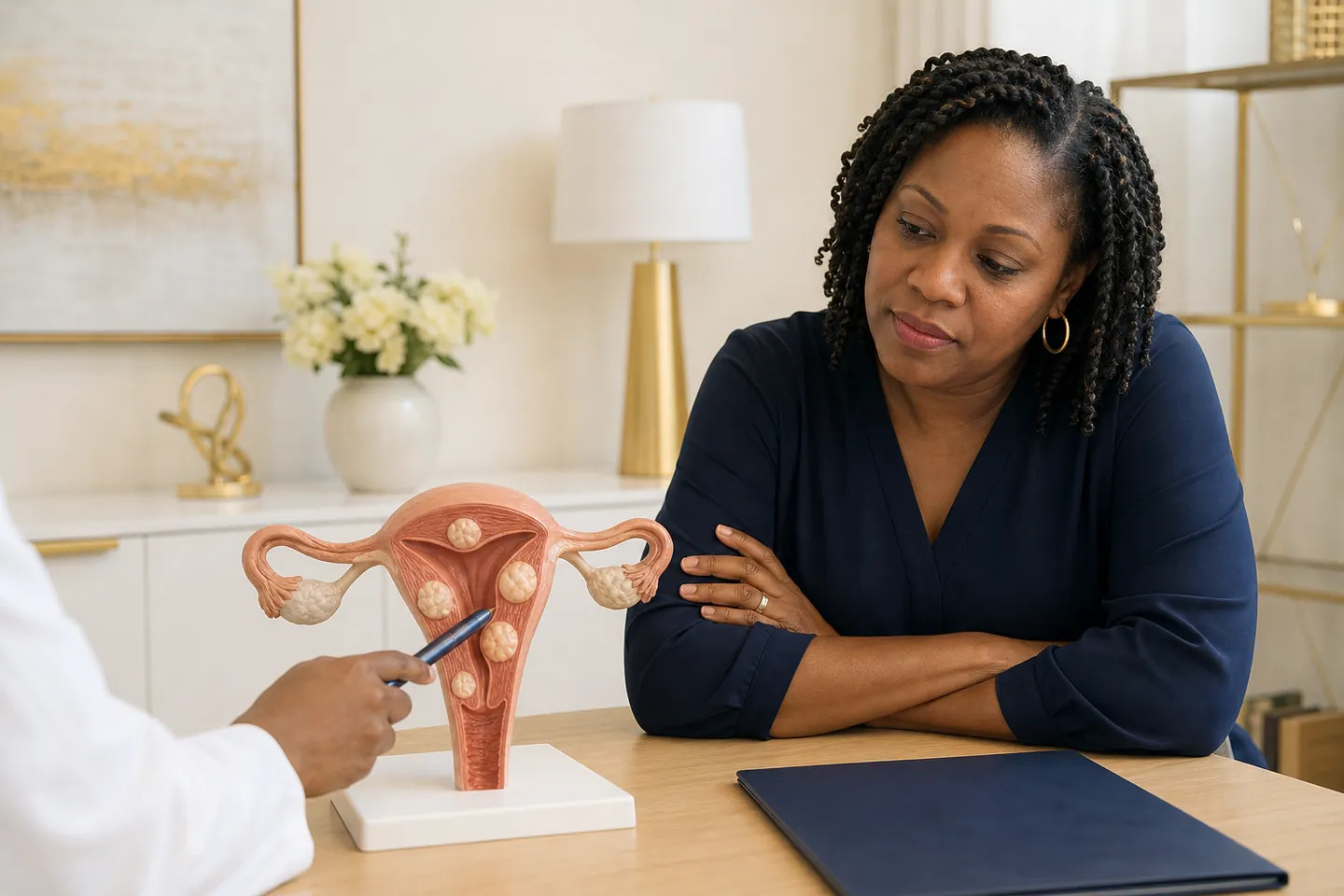
Fibroids are non-cancerous growths that develop in or around the womb (uterus). They are muscular, and you may hear them called leiomyomas or myomas. A woman can have one fibroid or many. They can be as small as an apple seed or as big as a grapefruit, and occasionally larger.

They are common. The US Office on Women's Health says about 20 to 80 percent of women develop fibroids by the age of 50. Most fibroids cause no symptoms, so you may not know you have them.

Symptoms
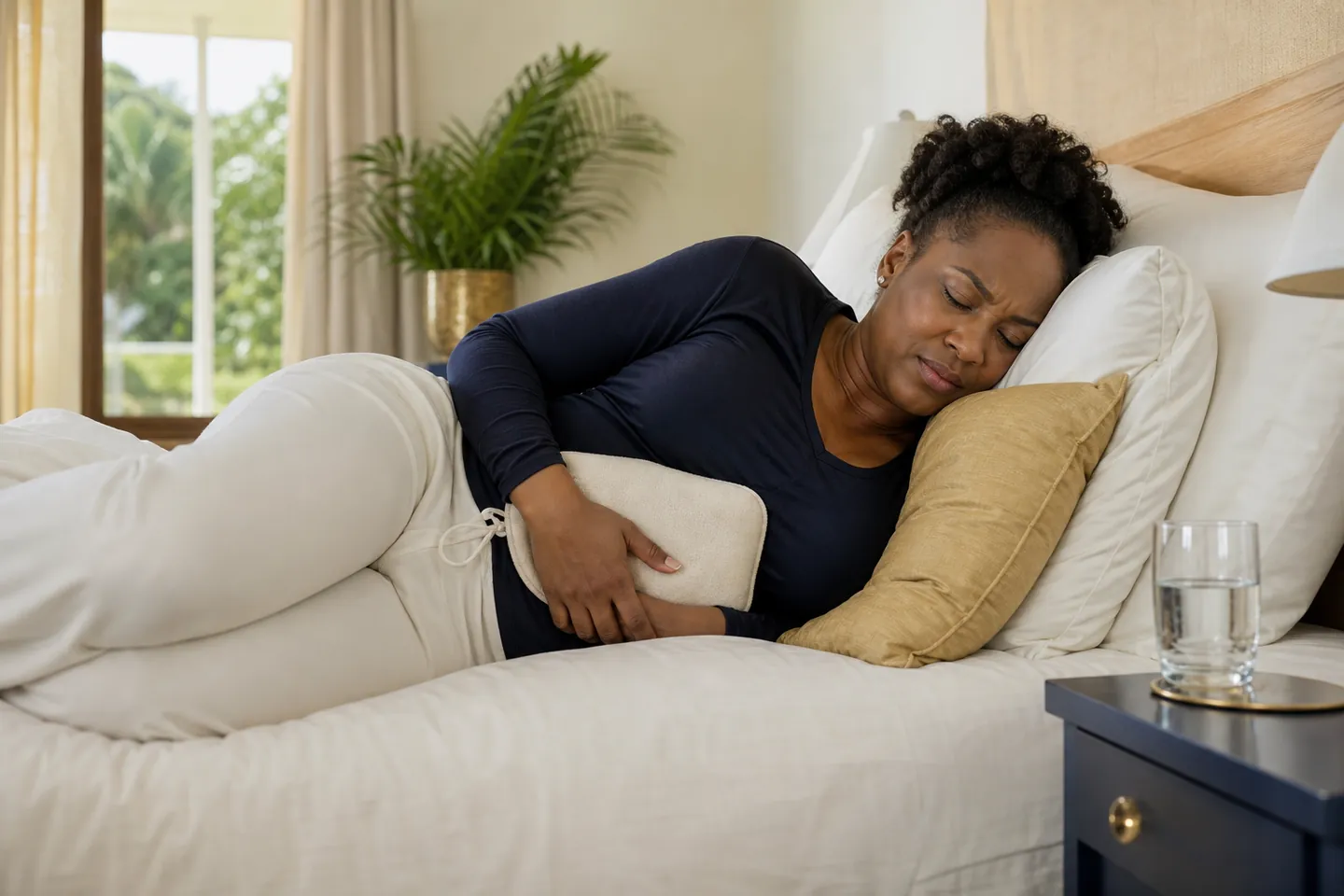
Heavy or painful periods, stomach pain, lower back pain, needing to pass urine more often, constipation or bloating, and pain or discomfort during sex. Some women feel fullness low in the abdomen, and some have difficulty getting pregnant. These are not all the symptoms fibroids can cause, so talk to a doctor if you are worried.
Where they grow
Most fibroids grow in the wall of the womb. Doctors group them by position: within the wall (intramural), into the cavity (submucosal) or on the outside (subserosal). Position helps decide which treatment suits.
Who gets them
The exact cause is not known. The NHS says you are more likely to get fibroids if you have not reached the menopause, have never had a full-term pregnancy, are overweight, have high blood pressure or diabetes, are from a Black or Asian background, or have a close relative who has fibroids.

The honest version

Fibroids do not always need treatment.

If they are not causing symptoms, you may not need any. Your doctor checks at your regular examinations whether they have grown.

At Oshun, all of this is talked through at your consultation.

02Medical Leadership

Who is the fibroids specialist at Oshun?

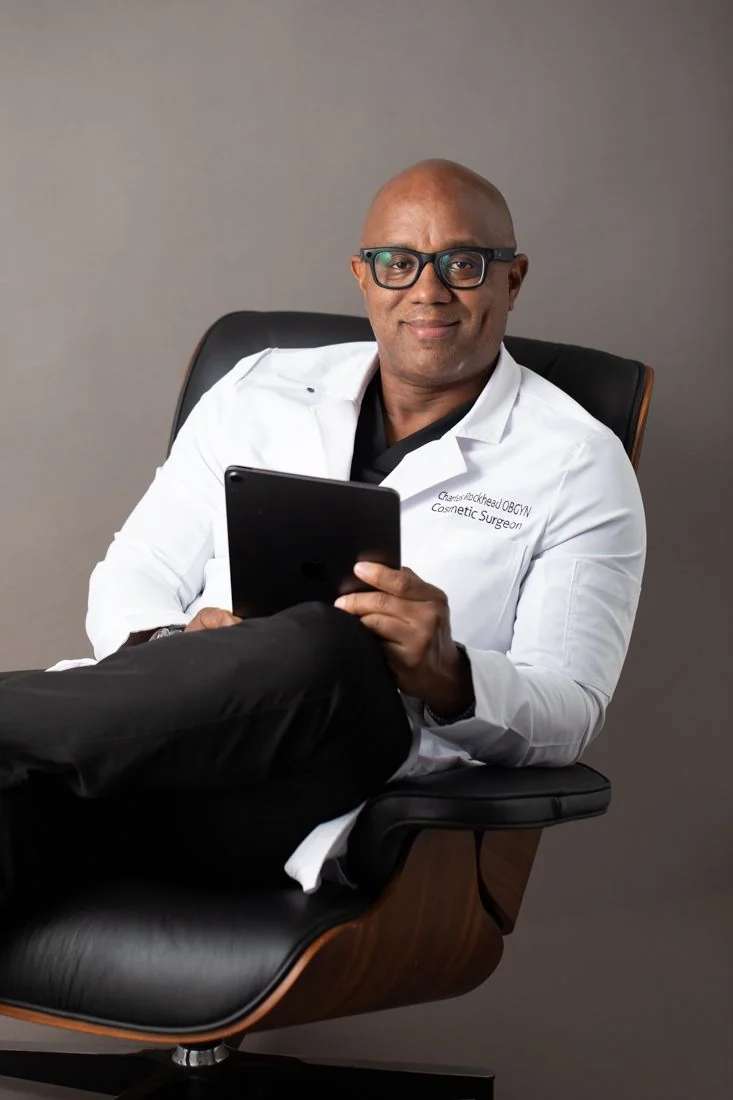
Oshun's fibroids specialist is Dr. Charles Rockhead. Your consultation is with him, in person, at 9 Devon Road in Kingston. He also performs the fibroid surgery Oshun offers: myomectomy and hysterectomy.

Dr. Charles Rockhead, board-certified Obstetrician and Gynaecologist, Medical Director of Oshun Cosmetic Services in Kingston, Jamaica

Dr. Charles Rockhead, Medical Director — Oshun Cosmetic Services, Kingston.

Dr. Charles Rockhead

Medical Director · Board-Certified OB/GYN · 30+ years of practice

Dr. Charles Rockhead is a board-certified Obstetrician and Gynaecologist with more than thirty years of practice in Kingston. He is the Medical Director of Oshun Cosmetic Services and the founding physician of Amadeo Medical Group, the parent clinical practice.

Read the clinic story · View Dr. Rockhead's LinkedIn

03Diagnosis

How are fibroids diagnosed?

The first step below is how it works at Oshun. The other three are general published guidance, and the tests you need may differ.

i.

Consultation

You meet Dr. Rockhead in person at 9 Devon Road. He reviews your medical history and your symptoms, examines you as appropriate, and explains the options, including the option not to proceed. If you already have a scan report, bring it with you.

ii.

Examination

Fibroids may be found at a pelvic examination, where a doctor can feel one as a lump on the womb. The examination may include checking your abdomen and pelvic area, and an internal examination.

iii.

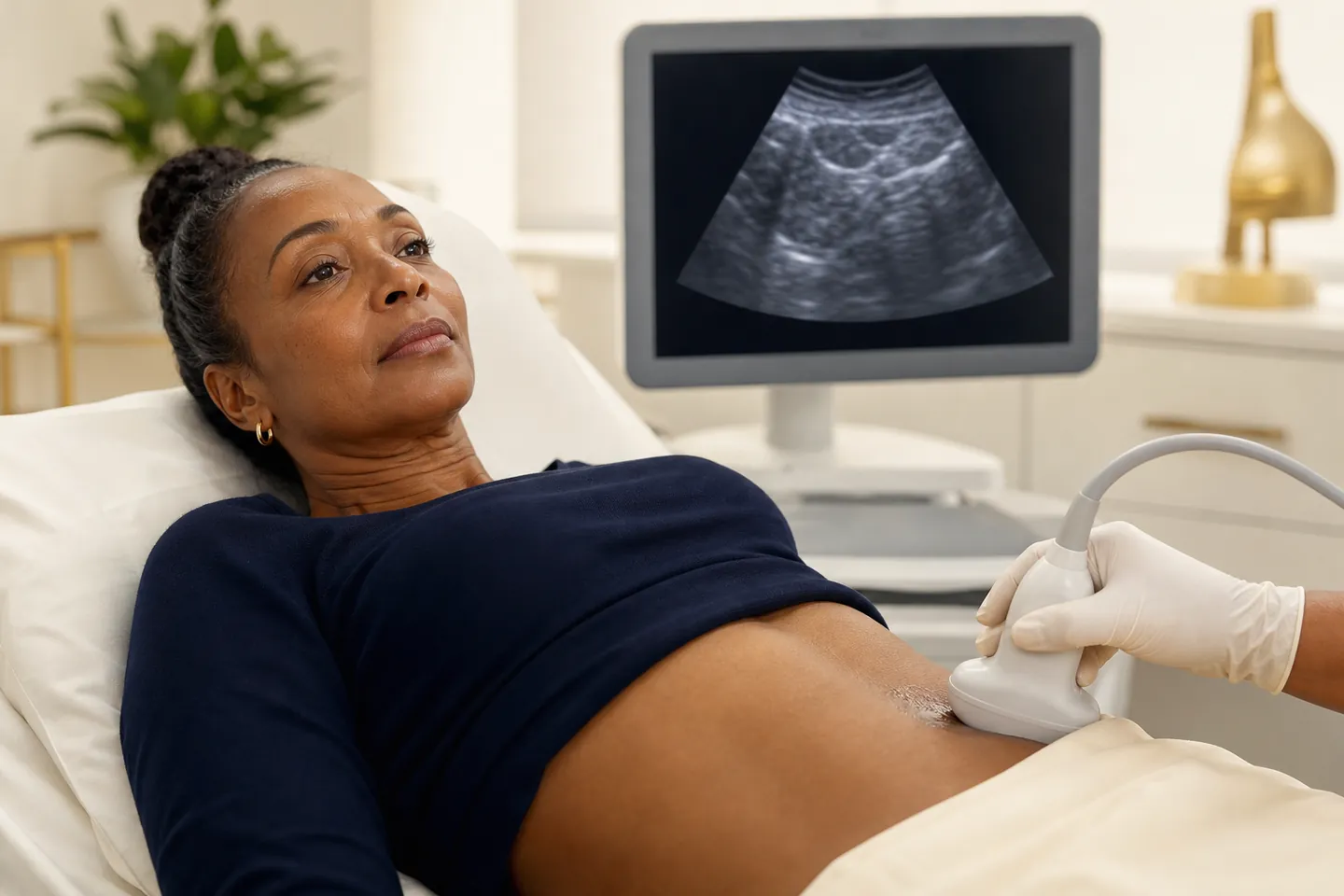
Ultrasound scan

An ultrasound scan is the usual test. It can show whether you have fibroids, how many there are, where they are and how big they are. In the UK, the NHS says a GP will usually refer you to a specialist for one.

iv.

Further tests, if needed

An MRI scan is another way to picture the womb. A hysteroscopy looks inside it with a thin scope passed through the cervix. A laparoscopy views it from outside through a small cut at the navel.

When a scan looks normal
Oshun's hysteroscopy page notes that hysteroscopy is more sensitive than ultrasound for small fibroids inside the womb cavity. If your symptoms continue after an ultrasound that looked normal, it is worth asking about.
Questions worth asking
How many fibroids do I have? How big are they, and where are they? What are my options if they become a problem?
04Treatment options

What are the treatment options for fibroids?

Fibroid treatment ranges from monitoring, through medicine, to surgery. Which one fits depends on your symptoms, the size, number and position of the fibroids, your age, and whether you may want to become pregnant.

Monitoring
The Office on Women's Health says fibroids that cause no symptoms may not need treatment, and that your doctor checks at your regular examinations whether they have grown. Oshun's annual gynaecological exam includes a pelvic examination.
Medicine
For painful or heavy periods the NHS lists painkillers such as ibuprofen, and tranexamic acid or a hormone medicine such as the combined pill to reduce bleeding. The Office on Women's Health describes medicines called GnRH agonists, which can shrink fibroids and are sometimes used before surgery. Their use is generally limited to six months or less, and the fibroids often grow back quickly once they stop.
Myomectomy
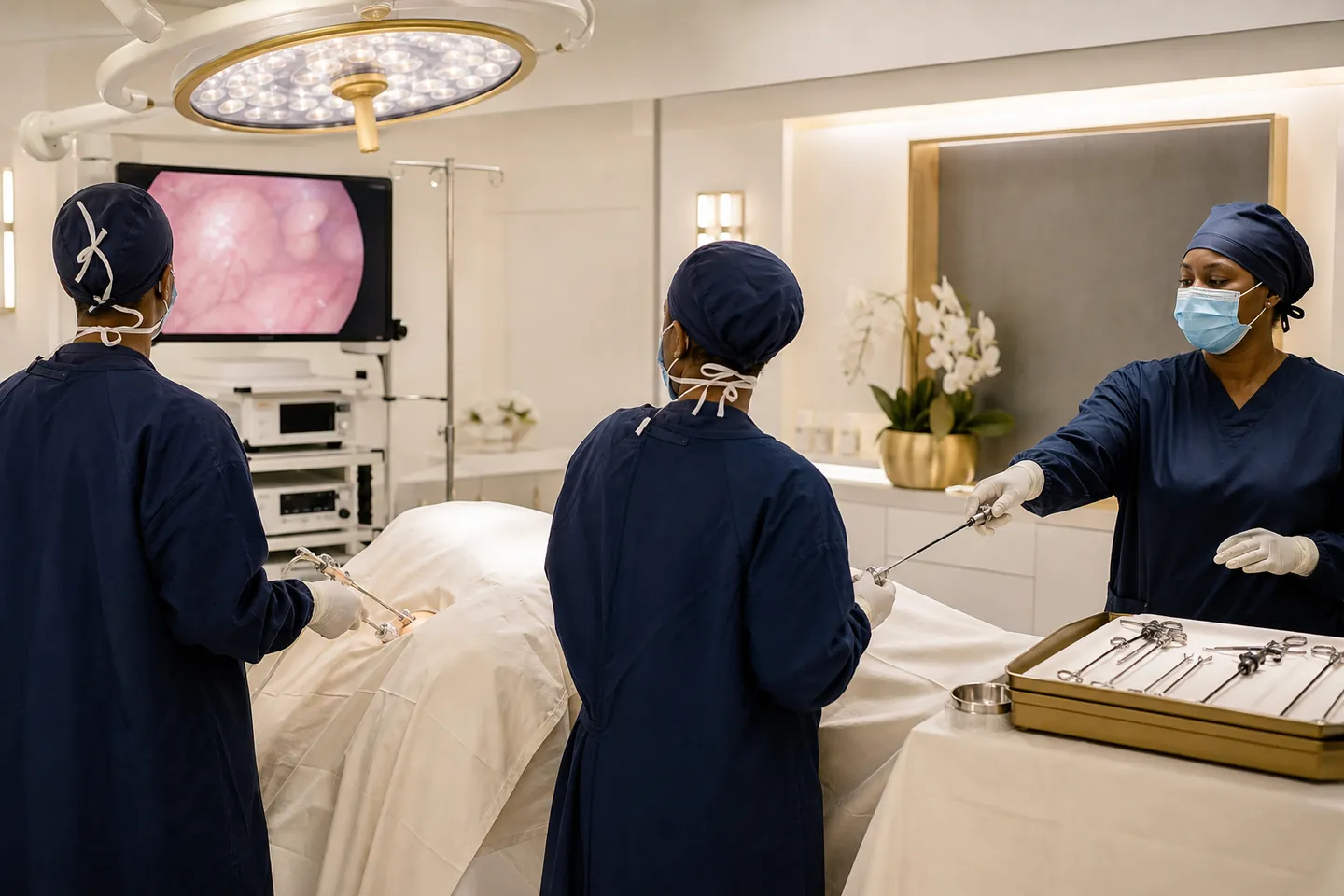
Myomectomy is surgery that removes the fibroids and leaves the womb in place. It is the surgical choice for women who want children afterwards or who want to keep their womb for other reasons. Depending on the size, number and position of the fibroids, it is done through the cervix (hysteroscopic), through small cuts (laparoscopic) or through an open incision. New fibroids can grow later.
Hysterectomy
Hysterectomy is surgery to remove the womb. The Office on Women's Health calls it the only sure way to cure fibroids. You can no longer become pregnant afterwards. The NHS describes it as a major operation with a long recovery, considered only after less invasive treatments have been tried.
Endometrial ablation
Endometrial ablation removes or destroys the lining of the womb to reduce heavy bleeding. The NHS lists it among the procedures used for fibroids, but it treats the lining, not the fibroid. Oshun's own ablation page says it is not a treatment for fibroids causing bleeding, and that such bleeding often persists afterwards. It is only for women who have completed their families, and reliable contraception is required afterwards.
Embolisation
Uterine artery embolisation is a non-surgical procedure that blocks the blood supply to the fibroids so that they shrink. It is not among the treatments Oshun lists. You can ask about it at your consultation.
If you want children
Say so at the start. Some fibroid treatments end the possibility of pregnancy, and others can increase the risk of problems during one.
05When to act

When should you see a doctor about fibroids?

When to book
See a doctor if you have symptoms of fibroids, if they are affecting your everyday life, work or relationships, or if painkillers are not helping. See one too if you have severe pain during your periods, or if you bleed between periods or after sex. Heavy periods have other causes, and rarely they can be a sign of womb cancer.
Heavy periods and anaemia
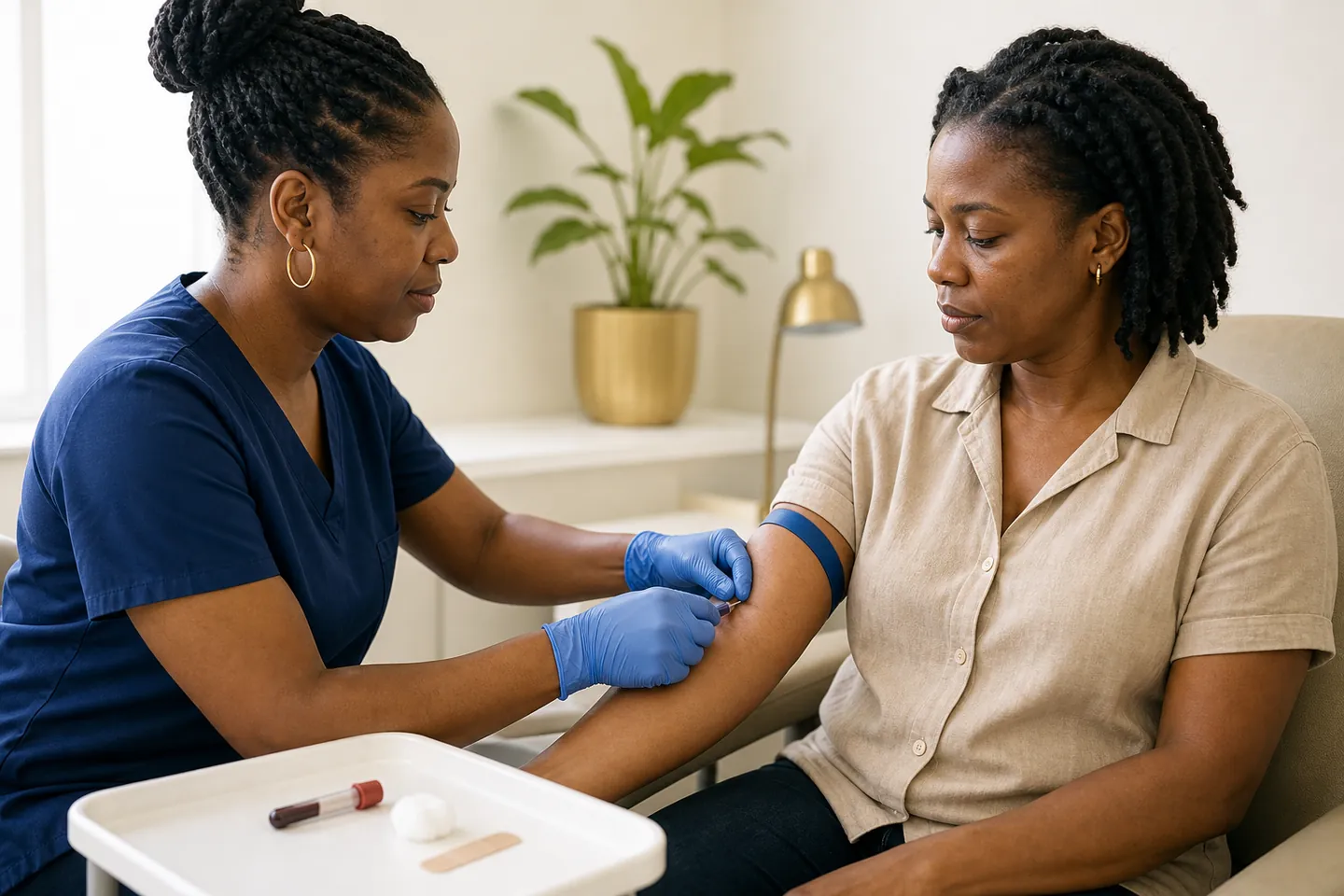
Heavy bleeding from fibroids can cause iron-deficiency anaemia, with tiredness, shortness of breath and paler skin than usual. A blood test confirms it, and it is usually treated with iron tablets. The NHS says that untreated it may raise the risk of complications affecting the heart or lungs. Oshun also offers iron infusion for confirmed iron-deficiency anaemia.
Fibroids and pregnancy
The Office on Women's Health says most women with fibroids have normal pregnancies. Fibroids do make some problems more likely, including a caesarean delivery, a breech baby and preterm delivery, so tell your obstetrician that you have them.
After the menopause
The Office on Women's Health says fibroids usually shrink after the menopause. Oshun's hysteroscopy page says bleeding after the menopause warrants evaluation.
The risks of treatment
Every operation carries risks, and they differ between myomectomy and hysterectomy. The risks that apply to you should be explained before you consent. Each operation's own page has more detail.

Four common reasons women ask about fibroids are below. If one sounds like you, a consultation at 9 Devon Road is the next step.

06Cost & booking

How do cost, insurance and booking work?

What it costs
The cost depends on which treatment you need. Fibroid surgery is priced by approach (hysteroscopic, laparoscopic or open), facility, anaesthesia and complexity. At Oshun your quote is given in writing at consultation, before you decide anything. For fibroid removal surgery, see the myomectomy page.
Consultation policy
Every fibroid patient meets Dr. Rockhead in person at the 9 Devon Road clinic before any treatment is scheduled. Virtual consultations are not currently offered.
Where treatment happens
Consultations are at 9 Devon Road in Kingston. Myomectomy and hysterectomy are performed at a hospital or accredited ambulatory surgical centre, which for hysterectomy has overnight capability.
How to pay
Cash, debit, credit card, or approved financing.
Insurance
Surgery for fibroids that are documented as causing symptoms is typically covered by health insurance. Check your own plan before you book.

If this sounds right

The next step is a conversation, not a commitment.

Fibroid care at Oshun starts with a consultation with Dr. Rockhead, in person at 9 Devon Road. You leave with a written plan, and the decision stays with you.

No obligation · Every consultation is in-person with Dr. Rockhead. Call +1 (876) 676-6297

The honest answers

Nine questions women ask about fibroids.

Open any of them. Each is worth raising again at your consultation.

What is the best treatment for fibroids?
There is no single best treatment. The right one depends on your symptoms, the size, number and position of the fibroids, your age, and whether you may want to become pregnant. Options range from monitoring, through medicine, to myomectomy or hysterectomy.
Can fibroids be treated without surgery?
Yes, some can. Fibroids that cause no symptoms may not need treatment at all. Medicines can ease painful or heavy periods. Surgery may be needed if medicine does not help, the fibroids are too large, or symptoms are getting worse.
Is there a fibroids specialist in Kingston, Jamaica?
Yes. At Oshun in Kingston, the fibroids specialist is Dr. Charles Rockhead, a board-certified obstetrician and gynaecologist with more than thirty years of practice. Consultations are in person at 9 Devon Road.
Are fibroids cancer?
Fibroids are almost always benign, which means not cancerous. The US Office on Women's Health says a cancerous fibroid occurs in fewer than one in 1,000 cases, and that having fibroids does not increase the risk of developing one.
Can I get pregnant if I have fibroids?
Most women with fibroids have normal pregnancies, according to the US Office on Women's Health. Difficulty getting pregnant can be a symptom of fibroids, and some fibroid treatments end the possibility of pregnancy, so say at the start if you want children.
Will fibroids come back after treatment?
They can. After a myomectomy, new fibroids can grow later. Fibroids shrunk with GnRH agonist medicines often grow back quickly once the medicine stops. Hysterectomy, which removes the womb, is the only sure way to cure fibroids, according to the US Office on Women's Health.
Do fibroids shrink after menopause?
Usually, yes. The US Office on Women's Health says fibroids are under the control of the hormones oestrogen and progesterone, and that they stop growing or shrink once a woman reaches the menopause.
Does Oshun offer uterine fibroid embolisation?
It is not among the treatments Oshun lists. Uterine fibroid embolisation, also called uterine artery embolisation, blocks the blood supply to the fibroids so that they shrink. The fibroid surgery offered at Oshun is myomectomy and hysterectomy.
How do I book a fibroid consultation at Oshun?
Booking is a two-step process: a private consultation first, with examination, planning and a quote, then treatment scheduling once you confirm. WhatsApp +1 (876) 676-6297 or schedule a consultation.
The treatments in detail

Three treatments patients ask about in the same conversation.

Two paths from here

One conversation away.

A fibroid diagnosis is not a decision. Some women need surgery, some need medicine, and some need nothing more than monitoring. The consultation is where you find out which, with a written plan to take home.

No obligation · Every consultation is in-person with Dr. Rockhead. Call +1 (876) 676-6297

WhatsApp Book consultation
Powered by IrieVybz AI — see how this site runs on Karen